Harriet Tubman Quotes
You’ll be free or you will die.
This leading “conductor” of the Underground Railroad carried a loaded pistol which she brandished if escaping slaves would get discouraged and not follow instructions endangering the others or the organization itself. The Underground Railroad referred to the clandestine method that Tubman and other “conductors” would risk their own lives by going down South and guiding escaped slaves through a series of safe houses and locations “stations” until they reached Canada where slaves could not be legally recaptured.
Harriet Tubman, c. 1820-1913, Slave and abolitionist, Frequent statement to slaves she was guiding
Sourced by: Eigen's Political and Historical Quotations


This is an important quotation because it shows that slavery was the principle reason that the South succeeded and began their rebellion. In the early 20th century, there was a movement to make the Confederacy and the rebellion more noble by promoting the idea that the Civil War was fought by the South for more lofty reasons such as States Rights, Original Construction, different economic philosophies and the like. This was a more noble cause then the right to deny other human beings their rights, to own other human beings who they could beat, torture, sexually use and even murder them was a pretty selfish and demeaning reason to have started a rebellion that would then cost more Americans their lives than any other American conflict. The succession documents and others of the Southern States and the Confederacy make it clear that slavery was THE issue and fleeting references to any of the others were only made to complain about the potential effect on abolition and the refusal of the abolitionist states to cease aiding and protecting fugitive slaves.


Grimke was the daughter of a prestigious, wealthy, slave owning, Southern Family from Charleston, and this letter was the first from anyone of the establishment of the South which favored abolition. It shook the Southern establishment to the core.
Parker and other escaped slaves in Christiana fought off slave catchers and killed the slave owner leading them. Charged with treason, he escaped to Canada with his family and lived there the rest of his life. While not a polished writer, after he himself had escaped and went to Christiana and leaned to read and write. He wrote this narrative of his life as a slave—one of the few written works we have from slaves.

This fear was great among many who were abolitionists as potentially there might be mass slaughter of all Southern whites.


The point about the negroes who were born into American slavery being less aggressive than those captured and transported to America is often overlooked. Slavery not only was cruel, moral, and inhuman in its own right, but also took its toll over generations as a result of the psychological effects of the terror of slavery. Despite these, it is amazing how resiliant the American Blacks were under those circumstances. in some cases one or two saves escaped after committing a violent act as they had little to lose for trying as they wold be killed if caught. A few of these escaped to the North and others reached Southern Cities like Charleston where there was a small free black community in which they could be absorbed.


This was the speech that started the "Black Power" Movement. The rally was held in a city park to Protest the murder just 10 days before of the civil rights activist, James Meredith. It also marked the break between the Student Nonviolent Coordinating Committee (SNCC) and the nonviolent movement lead by Martin Luther King. Because of that, the speech received so much publicity that "Black Power" became a significant political term instantly.


Jefferson was an enigma with respect to slavery. Whereas he always abhorred it in his writings, and argued for an end to slavery, he maintained slaves himself and never did free them, unlike Washington, who spoke on the subject much less, but left orders in his will that all slaves were to be set free.

Johnson had a white mistress who accompanied him visibly at a time when Blacks were lynched for dating white women in many parts of the country. He was criticized heavily by whites for going with a white woman and many Blacks for the same.


This was one of the first calls for a slave strike in America.
Soon after, he led 960 men, women and children in a mass suicide at Masada.
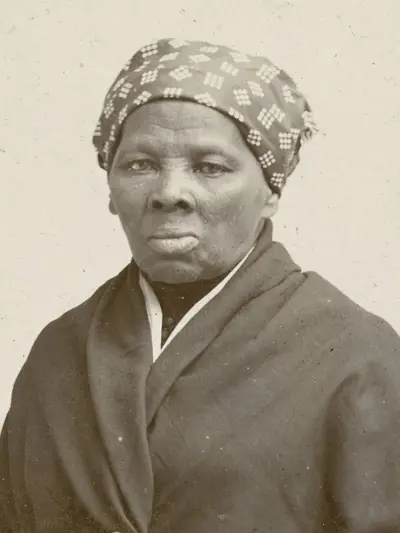
Harriet Tubman was an American abolitionist and political activist. Born into slavery, Tubman escaped and subsequently made some 13 missions to rescue approximately 70 enslaved people, including family and friends, using the network of antislavery activists and safe houses known as the Underground Railroad. During the American Civil War, she served as an armed scout and spy for the Union Army. In her later years, Tubman was an activist in the movement for women's suffrage.
