Clarence A. Cannon Quotes
You may think my business is to make appropriations, but it is not. It is to prevent their being made.
Clarence A. Cannon, 1879-1964, U. S. Congressman (Democrat, MO), Quoted in The Washington Post, September 5, 1993
Sourced by: Eigen's Political and Historical Quotations

1st Viscount Snowden

Roosevelt understood the value of symbols in forming public perception, and vetoes are often used by presidents to create a symbolic message.

Although Reagan vetoed some spending that he disapproved of, he wanted so much spending on his favorite programs that he not only never brought the budget under control but his spending created the largest deficit in American history -- until George W. Bush squandered the Clinton surplus and exceeded Regan’s spending greatly and left President Obama with the greatest budget deficit in world history and a collapsing economy. Ironically, despite the fact that Reagan ran up huge deficits for the time, he always verbally advocated balanced budgets and many people in the country were persuaded by Reagan of the importance of balanced budgets. It was President Clinton who balanced the budget and eliminated the Reagan deficits.

Perry was one of a number of politicians who became opposed to deficit spending, and claimed that the public was not interested in the various projects. However, whenever any of these politicians proposed projects or programs to cut, there would be many citizens who would object vehemently. It was precicely because there was a constituency supporting all the government programs that politicians found it so hard to keep spending under control. Indeed, when others suggested terminating spending on programs and projects Perry liked, he objected as strenuously as most others.


Automated Teller Machine by which banks dispense cash.


President Jefferson in 1803, in the first instance of presidential impoundment, deferred for a few months the building of gunboats for which Congress had appropriated funds. In 1876 the President actually refused to spend the congressionally appropriated funds for river and harbor improvements in the midst of bad economic times:


Both the House and the Senate, as they got larger, developed an Appropriations Committee. When the committee assessed a departmental appropriation, they had also the responsibility for all the other departmental budgets. However, many of the members of the Appropriations Committee tended to favor the interests of their particular constituency or the special interests to which they were beholden. Other members had little or no influence. So there was immense pressure during Reconstruction to ‘share’ the appropriations ‘plum’ by creating appropriations subcommittees. However, each particular subcommittee loses the perspective of and interest in the budget as a whole. The process has led to budget imbalance pressure ever since. But Randall, the Speaker of the House warned about exactly what would happen. He had earlier served as Chairman of the Appropriations Committee, and he was exactly right.


Bloomberg was one of the few people who say the meltdown of 2008 coming. His principle of saving a surplus for spending in the downturns, which served New York so well goes against most Democrat and Republican politicians. If there is a surplus, the Democrats want to spend it. The Republicans want to cut taxes and return the surplus. Neither is prepared for an economic slowdown.


The country was in a terrible recession and McKinley and other politicians of the time did not know about or understand the use of a counter-cyclical policy of government stimulus. With the economy devastated and the main revenue for the Federal Government coming only from import customs duty, the Federal coffers were emptying rapidly. Retrenchment was the only possible step that was then known.


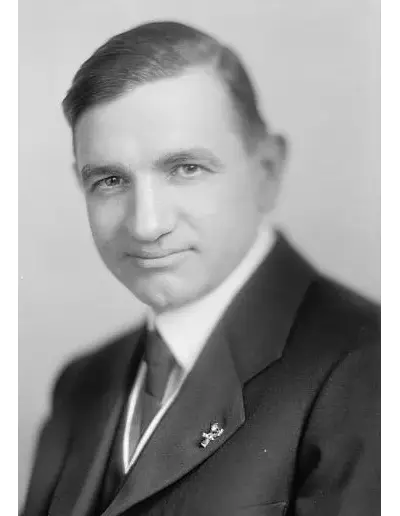
Clarence Andrew Cannon was a Democratic Congressman from Missouri serving from 1923 until his death in Washington, D.C. in 1964. He was a notable parliamentarian and chaired the U.S. House Committee on Appropriations. He is the longest-serving member of the United States House of Representatives from the state of Missouri.
