Ulysses S. Grant Quotes
Under no circumstances will I allow expenditures upon works not clearly national.
President Jefferson in 1803, in the first instance of presidential impoundment, deferred for a few months the building of gunboats for which Congress had appropriated funds. In 1876 the President actually refused to spend the congressionally appropriated funds for river and harbor improvements in the midst of bad economic times:
Ulysses S. Grant, 1822-1885, 18th President of the United States (Republican, OH), 1876
Sourced by: Eigen's Political and Historical Quotations

1st Viscount Snowden


Automated Teller Machine by which banks dispense cash.

Roosevelt understood the value of symbols in forming public perception, and vetoes are often used by presidents to create a symbolic message.


He was one of the few Congressman who never engaged in the shady practice of earmarking appropriations for their own districts, states, constituents and lobbyists who contribute to their campaigns. However, like almost all members of Congress, he was very aggressive in seeking and supporting programs for his district.


Although Reagan vetoed some spending that he disapproved of, he wanted so much spending on his favorite programs that he not only never brought the budget under control but his spending created the largest deficit in American history -- until George W. Bush squandered the Clinton surplus and exceeded Regan’s spending greatly and left President Obama with the greatest budget deficit in world history and a collapsing economy. Ironically, despite the fact that Reagan ran up huge deficits for the time, he always verbally advocated balanced budgets and many people in the country were persuaded by Reagan of the importance of balanced budgets. It was President Clinton who balanced the budget and eliminated the Reagan deficits.


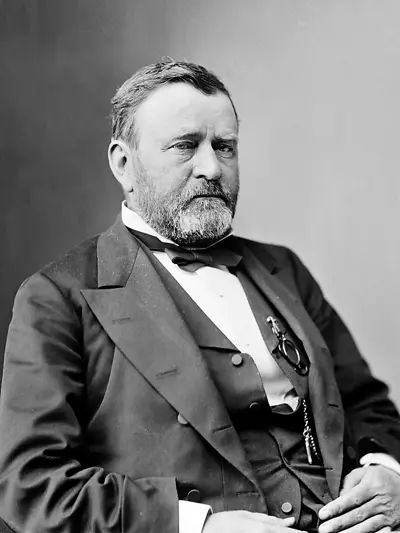
Ulysses S. Grant was an American military leader who served as the 18th president of the United States from 1869 to 1877. As president, Grant was an effective civil rights executive who created the Justice Department and worked with the Radical Republicans during Reconstruction to protect African Americans. As Commanding General, he led the Union Army to victory in the American Civil War in 1865 and thereafter briefly served as Secretary of War.
