Rick Perry Quotes
Washington has to stop spending money we don’t have for projects we don’t want.
Perry was one of a number of politicians who became opposed to deficit spending, and claimed that the public was not interested in the various projects. However, whenever any of these politicians proposed projects or programs to cut, there would be many citizens who would object vehemently. It was precicely because there was a constituency supporting all the government programs that politicians found it so hard to keep spending under control. Indeed, when others suggested terminating spending on programs and projects Perry liked, he objected as strenuously as most others.
Rick Perry, Governor of Texas (Republican), Statement, December 10, 2010
Sourced by: Eigen's Political and Historical Quotations


This is a particularly interesting historical quotation. It shows that when FDR was first elected, he had a classic view of deficit spending. However, above all, Roosevelt was a pragmatist and not an ideologue. Faced with the Great Depression that was not getting much better, Roosevelt turned around, changed his mind and policy about deficits and embarked on the “pump priming” approach of injecting substantial Federal spending into the economy and accepting the deficits in order to improve the situation which had been stagnant. FDR’s new policy staved off total disaster, but few remember that his great success was a total reversal of his earlier views.


In 1964 the treasury secretary asked the president how to sell the proposed budget to Congress:

1st Viscount Snowden


Roosevelt understood the value of symbols in forming public perception, and vetoes are often used by presidents to create a symbolic message.


This quotation pithily summarizes a common problem in politics of describing budgets. In most years there has been a national inflation. If a new budget is, in actual dollars, the same as the previous years or a little more, but the increase is less than the inflation level, the agency will not be able to provide the same level of services as the previous year. Therefore services will be cut and those who are politically in favor of more money for the program legitimately describe this as a “budget cut”. Opponents of larger funding increases, also legitimately describe the funding as a “budget increase”. One side refers to what the money can buy and the other, to the absolute dollars spent. This is an example of the classical ambiguity of political oratory.


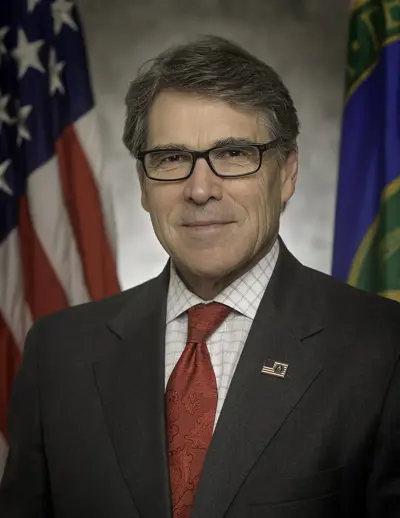
James Richard "Rick" Perry is an American politician who served as the 14th United States Secretary of Energy from 2017 to 2019 and as the 47th Governor of Texas from 2000 to 2015. Perry also ran unsuccessfully for the Republican nomination for President of the United States in the 2012 and 2016 elections.
