George Bernard Shaw Quotes
You have to choose between trusting to the natural stability of gold and the natural stability of the honesty and intelligence of the members of the government. And, with due respect to these gentlemen, I advise you, as long as the capitalist system lasts, to vote for gold.
Shaw, George Bernard. The Intelligent Woman's Guide to Socialism and Capitalism. Constable & Co., 1928.

This is a remarkable quotation in that it proposed exactly what the United States did in the Nixon administration. We went off the gold standard and backed American money with the wealth and “full faith and credit” of the nation and all its assets. It has been the strongest and most sought after currency in the world despite the fact that it is not backed by gold or silver as earlier American currency was.


Harvey was one of those who argued that silver and not gold should be the basis of American money. The country was growing and the amount of gold was relatively fixed; therefore money was scarce and many believed the English and American financiers were hording gold deliberately. The final solution was not a gold standard or a silver standard but what we have today—a currency backed only by the full faith and credit of the U. S.


There has always been a fear of inflation and currency debasement by governments. Since ancient times, rulers issued coins and when they were made of cheap metals like copper or iron, the ruler could mint as much as he wanted and when he did so the value went down. By using only precious metals, gold and silver, for coins, there would be a natural restraint on government. Garfield was one of those who believed that we should always have money of gold and silver. The United States would use that principle for the next century even backing its paper money with gold and silver. In the Nixon administration the United States abandoned the gold standard. Today, it is the ability of a country to produce things that maintains value of paper money which has been supplanted in many cases by electronic money.


At the time, a bank note—paper money issued be a private bank—was not backed by any gold or silver and was not insured bym the government. A bank could print as much as they wanted, so it was always worth less as the further you were from the particular issuing bank, the less you could get your bank note, because no one knew whether or not the issuing bank would redeem the note or even be in existence. So every private bank note had diminished value for the public. However, carrying gold and silver around and making change for precious metals was difficult and often impractical. So people used banknotes. The same thing happens with credit cards today. The merchant has to pay a fee to the credit card company and the bank and therefore charges us more for whatever we buy. But most consumers and merchants are willing to pay the difference to obtain the convenience of the credit card,


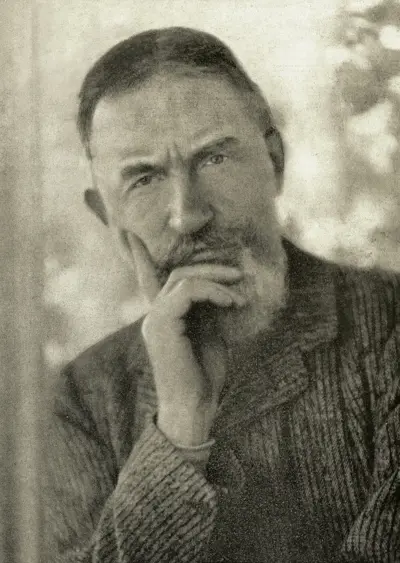
George Bernard Shaw, known at his insistence simply as Bernard Shaw, was an Irish playwright, critic, polemicist and political activist. His influence on Western theatre, culture and politics extended from the 1880s to his death and beyond. He wrote more than sixty plays, including major works such as Man and Superman (1902), Pygmalion (1912) and Saint Joan (1923). With a range incorporating both contemporary satire and historical allegory, Shaw became the leading dramatist of his generation, and in 1925 was awarded the Nobel Prize in Literature.
