George C. Marshall Quotes
You can't take a post of this kind and resign because the President of the United States makes a decision he is constitutionally empowered to make. You can resign at any other time for any other reason, but not at that time for that reason.
The secretary was urged to resign because President Truman had decided against him on a major policy issue. The only soldier ever so honored
George C. Marshall, 1880-1959, General & U. S. Army Chief of Staff, U. S. Secretary of State, U. S. Secretary of Defense, Nobel Peace Prize Winner Remark
Sourced by: Eigen's Political and Historical Quotations


The implication is that often the interpretation is unrealistic. In this case, President George W. Bush won reelection by a few percentage points and interpreted this as a mandate.


Opinion in case against the government for illegal CIA activities. The defense had been that the President had authorized and ordered the operations in question.

There have been many power struggles between the Legislative and Executive branches, but one of the more humorous began on August 27, 1906. President Theodore Roosevelt directed the Public Printer to observe a new orthographic convention designed to simplify the spelling of English. A furor broke out as Congress fought against such a radical departure The President was defeated and so was "simplified spelling."


Coolidge had no involvement in politics after his Presidency. He was never consulted by his successor and never resented that fact.


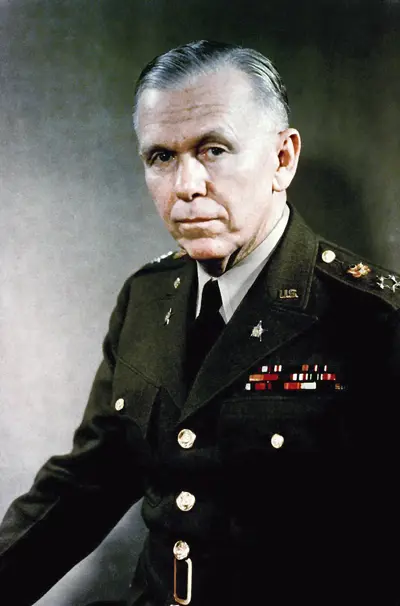
George Catlett Marshall Jr. was an American soldier and statesman. He rose through the United States Army to become Chief of Staff under presidents Franklin D. Roosevelt and Harry S. Truman, then served as Secretary of State and Secretary of Defense under Truman. Winston Churchill lauded Marshall as the "organizer of victory" for his leadership of the Allied victory in World War II. After the war, he spent a frustrating year trying and failing to avoid the impending civil war in China. As Secretary of State, Marshall advocated a U.S. economic and political commitment to post-war European recovery, including the Marshall Plan that bore his name. In recognition of this work, he was awarded the Nobel Peace Prize in 1953.
