Andrew Jackson Quotes
I could not do otherwise without transcending the limits prescribed by the Constitution for the President and without feeling that I might in some degree disturb the security which religion nowadays enjoys in this country in its complete separation from the political concerns of the General Government.
Andrew Jackson, 1767-1845, 7th President of the United States (Democrat, TN), Explanation of his refusal to proclaim a national day of fasting and payer, 1832
Sourced by: Eigen's Political and Historical Quotations


The official city seal at the time contained the Christian fish symbol.


Catholics were blamed by some for the defeat of Henry Clay in 1844. Anti catholic sentiment was high:. Johnson was then a Congressman representing a district where there were few Catholics and strong anti-Catholic feeling.


Kennedy was being hurt be fears that as a Catholic, he would be beholden to the Pope and the Catholic Bishops. There were many protestants who believed that the Catholic Church was antithetical to democracy and some who even believed that Catholicism was the religion of Satan. Kennedy decided to confront the issue head on.

This concept of Presidential powers greatly expanded the traditional power of the Presidency. To one degree or another this became the view of every president who followed until George W. Bush who went one large step further. He maintained that the President could do that which was specifically prohibited by law if the purpose was to perform a Constitutional duty.


The Presidential election of 1800 produced a crisis even greater than that of 2000. There was an Electoral College tie between Thomas Jefferson and Aaron Burr—both of the same party, Democratic Republicans. The Federalist Party led by President John Adams had been totally rejected by the voters and Adams was in third place. However, the Federalists saw an opportunity of maintaining the Presidency anyway. The Constitution threw the election into the House of Representatives with each State delegation having a single vote. In the House, the Federalists had parity with Jefferson’s party which resulted in 35 tie votes. Finally, Congressman Bayard, the sole Congressman from Delaware, withheld his vote on the 36th ballot, thereby electing Thomas Jefferson of the opposition party. His reason was:


Dewey was opposing the concept of “released time” from the public schools for religious instruction.
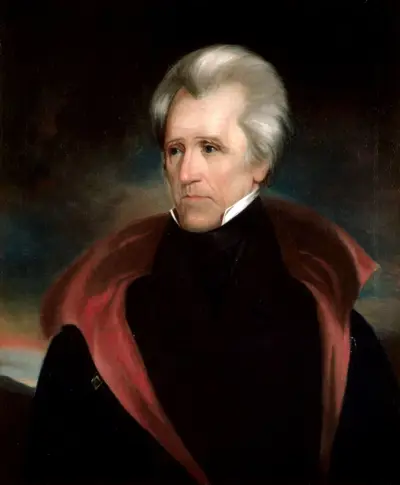
Andrew Jackson was an American lawyer, soldier, and statesman who served as the seventh president of the United States from 1829 to 1837. Before being elected to the presidency, Jackson gained fame as a general in the United States Army and served in both houses of the U.S. Congress. An expansionist president, Jackson sought to advance the rights of the "common man" against a "corrupt aristocracy" and to preserve the Union.
