Thomas Hobbes Quotes
Yet all the poor commonly lay the blame on the Evil Government, excusing their own sloth, and luxury, as if their private goods forsooth were wasted by public exactions.
Thomas Hobbes, 1588-1679, English Political Philosopher, Philosophicall Elements of a true Citizen
Sourced by: Eigen's Political and Historical Quotations


The nobles of the city were in rebellion and fought the English Prince of Wales. When the city was taken, the poor people as well as the nobles were executed for their part in the “rebellion.” However, the poor had no say in the matter, and it was not they who ordered the city gates shut and decided to undergo a siege, which in this case was not successful. Limoges was a heavily walled city, well provisioned for a siege, but the English had miners who undermined part of the city walls and crashed them into the moat and allowed the English to walk in easily.

Husayn Ali Nuri. This was a series of letters which he wrote to Napoleon, the Sultan and the other rulers of the day. At the time he was exiled to Edirne by Ottoman Sultan Abdulaziz.


There were few if any consumer protection laws in those days and many wealthy aristocrats made their money by taking advantage of the poor. They were the landowners, bankers, financiers and often the industrialists. Shaw was a sarcastic social critic and this is a typical line he gave his upper class characters. Today, we have more controls on business and finance, and many wealthy business people have gotten that way by providing great value to the consumers and being honest. However, we still have large numbers of wealthy members of society who do make their money from the poor and middle class by unethical and often illegal means. In the aftermath of the Meltdown of 2008. hundreds of thousands of the homes of the working poor and middle class were foreclosed by the major banks forging the legal documentation for the foreclusures. Millions of consumer contracts are issued that even a PhD cannot understand the terms of without special legal and financial training. There is even a legal definition of a salesperson lying to make a sale which is so commonplace that our law excuses it and calls it "puffing". However, there has been over time, improvement over Shaw's era.


Although Fiorello La Guardia proposed an aggressive reform program for New York City, he did not go far enough for some.

Ingersoll was considered to be the greatest orator and political thinker of his day, but his overt atheistic views curtailed his elected political career.


This is one of the FDR quotations, which his opponents then, and many conservatives later, characterized as “class warfare.” This type of accusation has in part protected business leaders and those who control wealth from public accountability. Similar business leader resentment was levied against President Obama when he criticized the Bankers and Wall Street leaders whose behavior, in great part, was the cause of the economic meltdown and recession of 2008.


Millions of people were hungry. There was not enough wheat (they called it corn) to make up for the failed potatoes, and the aristocracy, the landlords, had a very high protective tariff to prevent American wheat from driving the prices down. The aristocrats would not budge on the “corn laws” so Victoria and her government appropriated funds to buy expensive English wheat to distribute to the needy. She also instituted some public employment so the unemployed would, as in the New Deal later, would work on public improvement. However, all administration went through the landlords who took large portions of the corn for the poor to pay themselves for the cost of distributing the corn to the needy. Then many landlords assigned the publicly paid workers to improvement projects on their own personal land. The Queen and Prince were furious and they began an effort that would repeal the Corn Laws and make England a free trading nation.


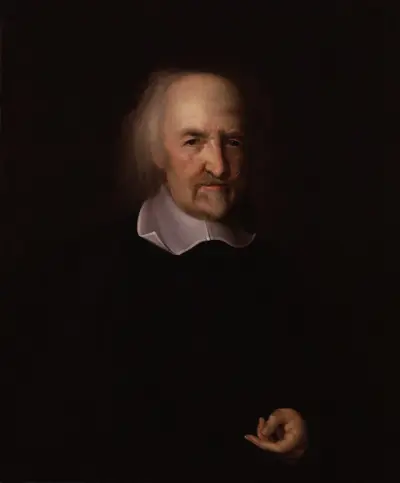
Thomas Hobbes was an English philosopher, considered to be one of the founders of modern political philosophy. Hobbes is best known for his 1651 book Leviathan, in which he expounds an influential formulation of social contract theory. In addition to political philosophy, Hobbes contributed to a diverse array of other fields, including history, jurisprudence, geometry, the physics of gases, theology, and ethics, as well as philosophy in general.
