Joseph Stalin Quotes
Mankind is divided into rich and poor, into property owners and exploited; and to abstract oneself from this fundamental division, and from the antagonism between poor and rich, means abstracting oneself from fundamental facts.
Joseph Stalin, 1879-1953, Russian Premier, Interview with H. G. Wells, September 1937
Sourced by: Eigen's Political and Historical Quotations


There were few if any consumer protection laws in those days and many wealthy aristocrats made their money by taking advantage of the poor. They were the landowners, bankers, financiers and often the industrialists. Shaw was a sarcastic social critic and this is a typical line he gave his upper class characters. Today, we have more controls on business and finance, and many wealthy business people have gotten that way by providing great value to the consumers and being honest. However, we still have large numbers of wealthy members of society who do make their money from the poor and middle class by unethical and often illegal means. In the aftermath of the Meltdown of 2008. hundreds of thousands of the homes of the working poor and middle class were foreclosed by the major banks forging the legal documentation for the foreclusures. Millions of consumer contracts are issued that even a PhD cannot understand the terms of without special legal and financial training. There is even a legal definition of a salesperson lying to make a sale which is so commonplace that our law excuses it and calls it "puffing". However, there has been over time, improvement over Shaw's era.


Ingersoll was considered to be the greatest orator and political thinker of his day, but his overt atheistic views curtailed his elected political career.


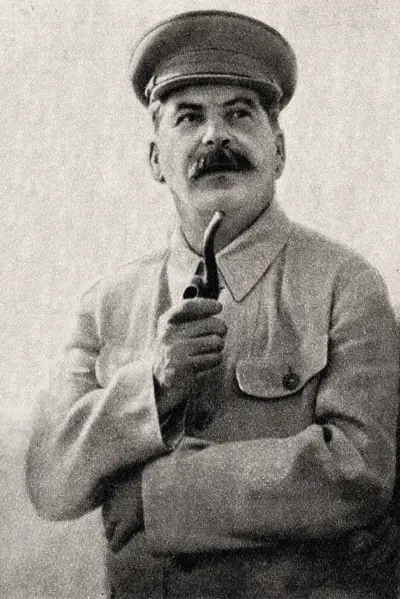
Joseph Vissarionovich Stalin was a Georgian revolutionary and the ruler of the Soviet Union from 1927 until 1953. He served as both General Secretary of the Communist Party of the Soviet Union (1922–1952) and Chairman of the Council of Ministers of the Soviet Union (1941–1953). Despite initially governing the country as part of a collective leadership, he ultimately consolidated power to become the Soviet Union's de facto dictator by the 1930s. A communist ideologically committed to the Leninist interpretation of Marxism, Stalin formalized these ideas as Marxism–Leninism while his own policies are known as Stalinism.
