Samuel Richardson Quotes
The pleasures of the mighty are obtained by the tears of the poor.
Richardson, Samuel. A Collection of the Moral and Instructive Sentiments, Maxims, Cautions, and Reflexions, Contained in the Histories of Pamela, Clarissa, and Sir Charles Grandison. S. Richardson, 1755.


Diamond’s observation refers to major technologies like farming and ability to use metals.


Ingersoll was considered to be the greatest orator and political thinker of his day, but his overt atheistic views curtailed his elected political career.


This novel won the Booker Prize—one of the great achievements in literature.


The term “rugged individualism” was used at the time be very conservatives and the very wealthy to describe business leladers with words that had very good public connotations. They argued that it would be undesirable to curtail their individualism that was so important by any government regulations or laws that would limit what the business leaders could do. However, the reality was that these very successful and powerful “rugged individualists” had regimented most everyone else—employees, consumers, and small businessmen who might sell them services or products. To Tugwell, if the wealthy and powerful few had no restrictions on their individualism, there would be precious little individualism for most of society. He sought a balance of regulating the individualism and prerogatives of the few somewhat in order to allow the vast majority of people to be able to have individuality as well.


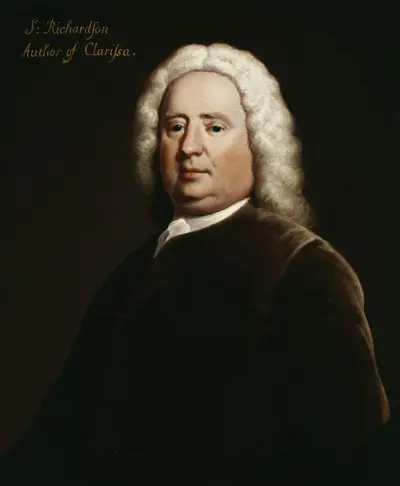
Samuel Richardson was an English writer and printer best known for three epistolary novels: Pamela; or, Virtue Rewarded (1740), Clarissa: Or the History of a Young Lady (1748) and The History of Sir Charles Grandison (1753). He printed almost 500 works during his life, including journals and magazines, working periodically with the London bookseller Andrew Millar. Richardson had been apprenticed to a printer, whose daughter he eventually married. He lost her along with five sons, but remarried and had four daughters who reached adulthood, but no male heirs to continue the print shop. As it ran down, he wrote his first novel at the age of 51 and immediately joined the popular, admired writers of his day. Leading figures he knew included Samuel Johnson and Sarah Fielding, and the eminent physician and Behmenist George Cheyne and the theologian and writer William Law, whose books he printed. At Law's request, Richardson printed some poems by John Byrom. In the literary world he rivalled Henry Fielding, and the two responded to each other's literary styles.
