William Cobbett Quotes
Would it not be a kindness to themselves to take their liberty from them? And a material advantage to the public to whip them to their work?
Although English, Cobett spent time in America and published a newspaper, The Porcupine Gazette, in Philadelphia. We was very conservative and even proposed legally enslaving the lazy poor. One of the reasons that he spent time in America was that he thought that England had become hopelessy democratic but thought there might be hope for America. Cobbett and his paper represented the extreme right wing fringe of the then Federalist Party. His Porcupine Gazette had a paying readership of 3,200, the largest circulation of any American daily newspaper.
William Cobbett, 1763-1835, [Harry Hedgehog], British Journalist & Editor, Member of Parliament, Referring to “poor and lazy” people, Porcupine's Gazette (Philadelphia), 1797
Sourced by: Eigen's Political and Historical Quotations


In Russia at the time, serfs were little better off than slaves. Not only did they have to obey their landlords in all things, but any who advocated disobedience on their part were beaten and sent to Siberia. Exile to the Siberian Gulags was not an invention of the Communists of the 20th century although they used that punishment in unprecedented numbers. It was used by the Czars and the Empress.


Negotiations regarding the exchange of prisoners and property. This was his view of his supposed obligation to return Negro slaves who had escaped and gone to the British during the war. The treaty of peace specified that all “property” including slaves, taken by, the British be returned to the Americans. But he and other officers did not always do so as they thought they had higher moral obligations. See {621936} for example.


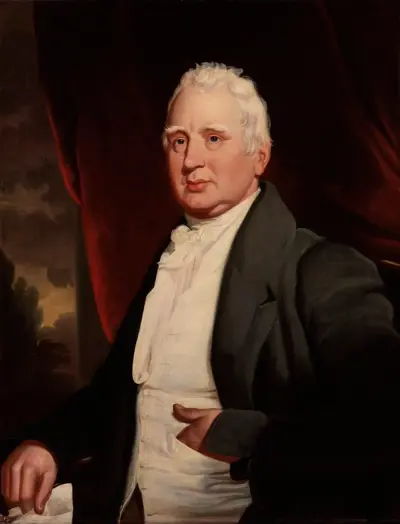
William Cobbett was an English pamphleteer, journalist, Member of Parliament and farmer born in Farnham, Surrey, one of a popular agrarian faction seeking to reform Parliament, abolish "rotten boroughs", restrain wanton foreign activity and increase wages, to promote domestic peace and ease poverty among farm labourers and smallholders. He backed lower taxes, saving, reversing enclosures of commons and resisting the gold standard of 1821. He sought an end to borough-mongers, sinecurists and "tax-eaters" (overpaid and corrupt bureaucrats, public servants and stockbrokers), and dismissed British Jews in a typecast by the same token. Early in life he was a soldier and devotee of king and country, but later pushed for a radicalism that helped to produce the Reform Act 1832 and gain him one of two seats in Parliament for the newly enfranchised borough of Oldham. He urged Catholic emancipation. He saw British agriculture and other economic output geographically. His polemics cover subjects from political reform to religion. His best known book is Rural Rides (1830, still in print). He argued against Malthusianism that economic betterment could support global population growth.
