Peter Dicken Quotes
Without the parallel development of systems of monetary - and credit-based exchange - there could have been no development of economies beyond the most primitive organizational forms and the most geographically restricted sales.
Dicken, Peter. Global Shift: Reshaping the Global Economic Map in the 21st Century. 4th ed., Guilford Press, 2003, p. 437.


The most successful way of poor nations developing rapidly is to trade with rich nations.

Europe was still suffering from the economic effects of the Great Recession.


Responding to an editorial criticizing Malawi's government as a tyranny:

The Progressive article was an interview with Movie Director and Screenwriter Oliver Stone who told the interviewer that he had learned of this quotation when he did his research for his film, South of the Border where he had several interviews with President Kirchner.
Three years after he wrote this essay, the U. S. Economy suffered the Meltdown of 2008 and the Great Recession where the major American banks had much too small capital bases to survive so the Federal Reserve and the taxpayer bailed the banks out. Much of the problem was if a consumer or a business borrows money from a bank, he/she must have a capital base at least equal to the amount borrowed. But under the modern American banking system, if a bank wants to borrow from the people, the bank doesn’t even have to have a capital base of as much as ten percent of what it borrows and often has considerably less.


The great challenge is trying to develop and modernize a culture that does not want to be modernized at the moment but still wants many of the benefits of modernization.

There must be enough money in circulation so that all people who want to buy things will have a vehicle for paying for it else people would be reduced to barter and tade—a much less efficient mechanism. Note the importance that Franklin gives to being able to attract immigrants. This was considered extremely important in colonial America. Immigration was the main engine of growth and development. Many believe that it still is.

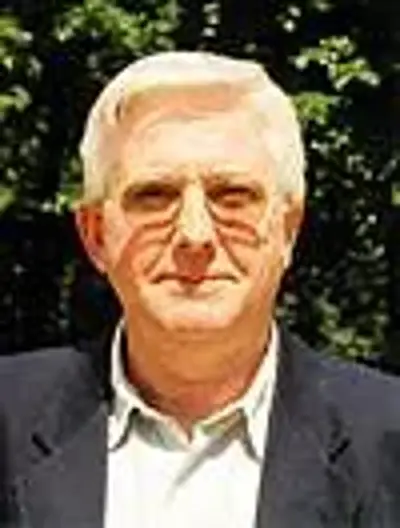
Peter Dicken (born 1938) is an economic geographer whose research is primarily focused on the processes and patterns associated with globalisation. He joined the University of Manchester in 1966 following the successful completion of his MA from the same institution. He is currently an Emeritus Professor at the same university to which he has dedicated his academic life, continuing his research on global patterns of business and globalisation. His self-described area of research is:
