Rana Foroohar Quotes
The single biggest unexplained reason for long term lower growth is that the financial system has stopped serving the real economy and now serves mainly itself.
Saving Capitalism", Time, May 23, 2016
Sourced by: Eigen's Political and Historical Quotations

At the time, the economy was virtually controlled by the banks and others in the finance, as opposed to businesses that produced things or provided non-financial services to consumers and business which was that had prevailed ever since the Great Depression, when New Deal legislation controlled the banks, stock markets, and other facets of the financial industry.


Arguably, for most of American History, most of the “smartest” people contributed to manufacturing, construction, research and development—activities that produce things that are wanted and/or needed. However, Wall Street began attracting and paying for some of the smartest people in the society, who when they engaged in finance—not only contributed less to manufacturing, but began to create highly complex financial instruments and procedures that few people could understand and with which regulators have difficulty understanding. These and the other schemes of financing have been major factors in the economic problems that have beset the economy including the meltdown of 2008 and the subsequent Great Rescission.


The most successful way of poor nations developing rapidly is to trade with rich nations.


Iceland's economy collapsed in the Meltdown of 2008. Their largest banks failed completely as they had engaged in the same kind of risky investments as the American banks had. Their government however did not have the assets to bail their banks out. So they let the banks fail and protected the small depositors with their limited assets. They then devalued their currency drastically, making their fishing and other products a great bargain for other nations of the world and though humiliated the Islanders started getting jobs as demand for Islandic exports grew. Some Icelanders who owned companies were making a great deal of money. Taxes were raised for high income citizens. To prevent the money being taken out of the country and invested so that the jobs would not benefit Icelanders or the earnings were not as taxable in Iceland, the nation imposed Capital Controls—no money was allowed to be taken out of the country except small amounts for business travel expenses. Iceland recovered rapidly and by 2015, at which point the Minister of Finance felt that the country was losing more than it was gaining, so it was time to end the Capital Controls.


She was refuting the claim of many economic conservatives that cutting taxes will always produce economic growth. Actually, in many cases tax cuts do have that effect, but as the counter-example shows, not always and not under all conditions. The Kennedy tax cuts, for example, did produce economic growth.


Carney was a Canadian. Under a quirk of British law, the Governor of the Bank of England need not be a British citizen so long as he is a citizen of a Country of the British Empire.


U. S. Treasury Secretary Larry Summers called Rajan a “Luddite” for this view, but what Rajan observed and predicted was exactly what happened in the Meltdown of 2008 which led to the Great Recession. Rajan was one of the few economists to call this right. Several, invested their own money assuming a crash and made billions. Most, like Summers and the Federal Reserve Chairmen in retrospect admitted that they missed the signs and didn’t connect the dots. See {637168}, {637987}, and {620038}
_0_thumbnail_47x47.jpg "Bill White, Mayor of Houston, Texas")
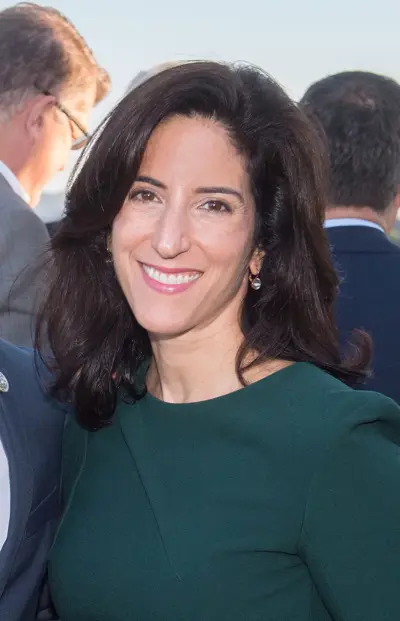
- Born: March 4, 1970
- Nationality: American
- Profession: Economics Editor
Rana Aylin Foroohar is an American business columnist and an associate editor at the Financial Times. She is also CNN's global economic analyst.
