Lionel Trilling Quotes
The real problems of our economy began when the very smart people of our society went to Wall Street.
Arguably, for most of American History, most of the “smartest” people contributed to manufacturing, construction, research and development—activities that produce things that are wanted and/or needed. However, Wall Street began attracting and paying for some of the smartest people in the society, who when they engaged in finance—not only contributed less to manufacturing, but began to create highly complex financial instruments and procedures that few people could understand and with which regulators have difficulty understanding. These and the other schemes of financing have been major factors in the economic problems that have beset the economy including the meltdown of 2008 and the subsequent Great Rescission.
Lionel Trilling, 1905–1975, Critic & Educator, Quoted on C-SPAN, Book TV, January 21, 2012
Sourced by: Eigen's Political and Historical Quotations


Franklin D. Roosevelt and the New Deal then created the Securities and Exchange Commission to Regulate the Stock Market and that kept things under reasonable control for over 50 years, but then the fraudulent schemes had gotten very sophisticated and the Enron and other scandals were uncovered, leading to Sarbanes Oxley and other more regulatory legislation.


This is essentially what happened in the Economic Meltdown of 2008 leading to the Great Recession.


Essentially Mellon told the President to let the entire economy crash. With huge numbers of people out of work, labor would be more humble and not only settle for lower wages, but will work harder, and without "excess" income beyond their basic needs, they would not drink and engage in other immoral activities. President Hoover, a wealthy man himself, did not go along with Mellon's idea of making the situation worse, but his conservative philosophy of government would not allow the Government to "interfere" with the private economy or give any direct assistance to the citizens.


The Grammar Curmudgeon


Born thought that her agency was responsible for regulating the new esoteric financial products—derivatives including credit default swaps—for otherwise there would be no regulation at all of financial products that could dwarf the stock and bond market. Summers persuaded her to back off. When the Meltdown of 2008 hit, the huge derivative exposure of the large banks and some insurance companies was so great that it was one of the major causes for the meltdown of the entire banking system. Summers, normally a great economist not only called this one wrong, but later, along with most other government and private economists ignored a very explicit warning—See {637168}, {637986}, and {620038}.
Geithner, the Treasury Secretary immediately after the Meltdown of 2008, facing complete collapse of our financial system, among other ameliorations, advocated and implemented many subsidies to bail out the banks most of whom had been greedy, foolish and often dishonest. He even allowed banks to use taxpayer money to pay bonuses to Bank executives who had brought the bank to ruin being a cause of the crisis. However, the banks not only survived but recovered and made huge profits while many of the taxpayers whose funds were used to help the banks were still struggling to make ends meet and it was they who received little, if any, government assistant.


U. S. Treasury Secretary Larry Summers called Rajan a “Luddite” for this view, but what Rajan observed and predicted was exactly what happened in the Meltdown of 2008 which led to the Great Recession. Rajan was one of the few economists to call this right. Several, invested their own money assuming a crash and made billions. Most, like Summers and the Federal Reserve Chairmen in retrospect admitted that they missed the signs and didn’t connect the dots. See {637168}, {637987}, and {620038}
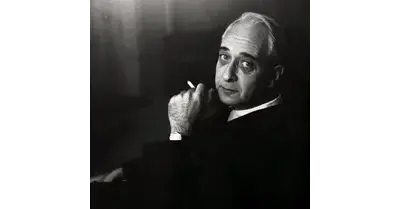
Lionel Mordecai Trilling was an American literary critic, short story writer, essayist, and teacher. He was one of the leading U.S. critics of the 20th century who analyzed the contemporary cultural, social, and political implications of literature. With his wife Diana Trilling (née Rubin), whom he married in 1929, he was a member of the New York Intellectuals and contributor to the Partisan Review.
