Fareed Zakaria Quotes
From 1891 to 1972, U. S. productivity grew at an average rate of 2.33 percent, which is high, but then it dropped substantially so that from 1972-1996 it averaged only 1.38 percent. In other words, the Reagan tax cuts and deregulation did not spur productivity growth, even allowing for a long time.
This quotation is important as it provides a major counter-example to the ideological political belief that tax cuts and deregulation produce economic growth. Sometimes they do, but other times they do not. Ironically the greatest periods of growth in the last half of the 20th century included some of the highest rates of taxes. At other times high taxes curtailed growth. As with many political ideologies, they are really not principles or laws of nature or economics, but political preferences.
Fareed Zakaria, Editor, Foreign Affairs, Time & Newsweek International, Commentator and Host, The Global Public Square, Political Commentator and TV Host, “Zacharia Replies”, Foreign Affairs, May-June 2013
Sourced by: Eigen's Political and Historical Quotations

This quotation was very important because the most important economic principle of Republican ideology since the 1960s has been that tax cuts will produce economic growth and the converse: that tax increases will stifle economic growth. For 50 years the Republican nostrum for all economic problems has been to increase growth by cutting taxes and opposing all tax increases. However Leonhardt studied the data and results since 1987 and found that the Republican doctrine had been wrong. Economic growth plummeted when we had the largest tax cuts in the George W. Bush years and the greatest growth spurts were following the 1990 George W. Bush tax increase and the 1993 Bill Clinton tax cuts. When the data became public some Republicans took the view that taxes were just one of the factors determining economic growth and have been overwhelmed by other factors. Some Democrats argue that if this were really believed by Republicans, they would have favored these other factors more so than tax cuts when in fact tax cuts are always their nostrum.


She was refuting the claim of many economic conservatives that cutting taxes will always produce economic growth. Actually, in many cases tax cuts do have that effect, but as the counter-example shows, not always and not under all conditions. The Kennedy tax cuts, for example, did produce economic growth.

The Progressive article was an interview with Movie Director and Screenwriter Oliver Stone who told the interviewer that he had learned of this quotation when he did his research for his film, South of the Border where he had several interviews with President Kirchner.


Iceland's economy collapsed in the Meltdown of 2008. Their largest banks failed completely as they had engaged in the same kind of risky investments as the American banks had. Their government however did not have the assets to bail their banks out. So they let the banks fail and protected the small depositors with their limited assets. They then devalued their currency drastically, making their fishing and other products a great bargain for other nations of the world and though humiliated the Islanders started getting jobs as demand for Islandic exports grew. Some Icelanders who owned companies were making a great deal of money. Taxes were raised for high income citizens. To prevent the money being taken out of the country and invested so that the jobs would not benefit Icelanders or the earnings were not as taxable in Iceland, the nation imposed Capital Controls—no money was allowed to be taken out of the country except small amounts for business travel expenses. Iceland recovered rapidly and by 2015, at which point the Minister of Finance felt that the country was losing more than it was gaining, so it was time to end the Capital Controls.


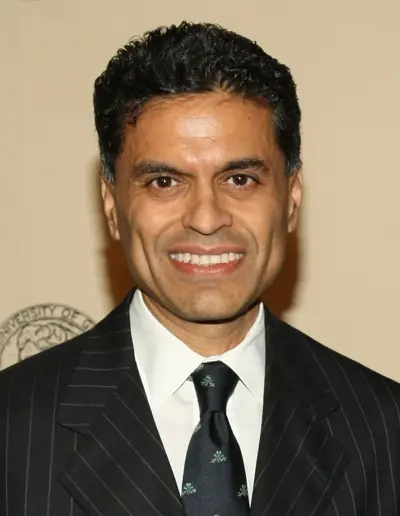
Fareed Rafiq Zakaria is an Indian-American journalist, political commentator, and author. He is the host of CNN's Fareed Zakaria GPS and writes a weekly paid column for The Washington Post. He has been a columnist for Newsweek, editor of Newsweek International, and an editor at large of Time.
