Arthur Young Quotes
Will posterity believe that, while the Press has swarmed with inflammatory productions that tend to prove the blessing of theoretical confusion and speculative licentiousness, not one writer of talent has been employed to refute and confound the fashionable doctrines, nor the least care taken to disseminate works of another complexion.
Young, Arthur. The Example of France, a Warning to Britain. W. Richardson, 1793.

See {583400} for the other side of the argument." Oversees and sets policy for the Voice of America


Chairman of the Board of The Washington Post. The Attorney General had attempted to suppress information linking him to the Watergate conspiracy by threatening Washington Post staff. The story was run, and Mr. Mitchell was later convicted for his crimes in connection with Watergate.


Usually Jefferson was the strongest voice for rights with no loopholes. However, he wanted to have a slander exception as this quote shows. However, the issue is what happens if a government official or an agency believed that it has been falsely slandered? If Jefferson’s proposal was accepted completely, the government and officials could sue someone who published negative information that they thought was false. Our supreme court has limited the exception to private parties who were NOT “public figures” unless the publisher knew the information was false and proceeded anyway for malicious reasons.
England and most other countries do not have such an exception and the press is very timid about criticizing the government or officials lest they make a mistake .
The word “printer” had a slightly different meaning then. In Jefferson’s time the printer was also the publisher, Benjamin Franklin was known as a printer but he not only published material but wrote much of it himself. This was typical. So Jefferson is concerned with the rights of the printer, the publisher and the writer.

The evils of the time were even worse than in modern times. Most newspapers, journals, and periodicals were in 1835 actually owned and operated by political parties or people totally identified with political parties. In modern times, there are publications and blogs which are controlled by political forces, but most are not.


Samuel Langhorne Clemens, 1835-1910

America was entering the First World War as a combatant but there was considerable anti-war sentiment. The Wilson administration over-reacted and instituted many repressive laws and regulations. Leading Americans like Eugene Debs was jailed for several years simply for opposing the war and the military conscription that went with it. Our scientists were not allowed to receive German scientific journals which of course hurt us and not the Germans who read their research and ours.

Vladimir Lenin. Lenin was echoing criticisms that were made the world over and even by some in the United States. However, his solution to have the press controlled by the ruling party just changed the cast of characters who were propagandizing and distorting the truth. Lenin was not able to offer a better solution nor were others. However, with enough affluence the capitalist society produced enough different publishers all competing that one did not dominate public opinion. With technology of TV and the Internet, the bar to entry is so small that almost anyone can be a publisher and find an interested market. In a way technology has solved much of the problem for capitalistic and totalitarian societies alike. In the latter, even censorship is not easy or feasible on a large scale.


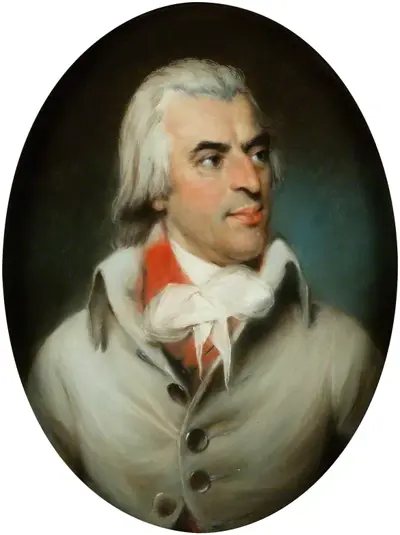
Arthur Young was an English writer on agriculture, economics and social statistics. Not himself successful as a farmer, he built on connections and activities as a publicist a substantial reputation as an expert on agricultural improvement. After the French Revolution of 1789, his views on its politics carried weight as an informed observer, and he became an important opponent of British reformers. Young is considered a major English writer on agriculture, although he is best known as a social and political observer. Also read widely were his Tour in Ireland (1780) and Travels in France (1792).
