William Henry Harrison Quotes
There is no part of the means placed in the hands of the Executive which might be used with greater effect for unhallowed purposes than the control of the public press.
William Henry Harrison, 1773-1841, 9th President of the United States (Whig, OH), Inaugural Address, March 4, 1841
Sourced by: Eigen's Political and Historical Quotations

Samuel Langhorne Clemens, 1835-1910


This quotation illustrates that government use of censorship and classification to cover up errors and mistakes in not just a modern phenomenon. It is a technique that government’s will gravitate to whenever they have the chance.


Fleischer had asked that the White House be given advance notice of any stories the New York Times might be covering in the future dealing with national security. As outlandish as this request may seem given the first amendment, it is a good illustration of the level of concern and panic of the George W. Bush White House who saw the situation as so fearful that that they initiated many constitutionally questionable practices. See {642527} for Fleischer’s request. New York Times has had a practice over the years of holding stories then they were persuaded that damage to the nation or to individuals would ensue as the result of publication at that time. However, the government has at times abused this policy as in the Pentagon Papers Case.


The evils of the time were even worse than in modern times. Most newspapers, journals, and periodicals were in 1835 actually owned and operated by political parties or people totally identified with political parties. In modern times, there are publications and blogs which are controlled by political forces, but most are not.

The queen was a lot more sophisticated about the newspapers than politicians in the 21st century.

Arguing against explicit guarantees of press freedom in the Constitution Hamilton felt that the freedom could be maintained by public opinion and the good will of government:


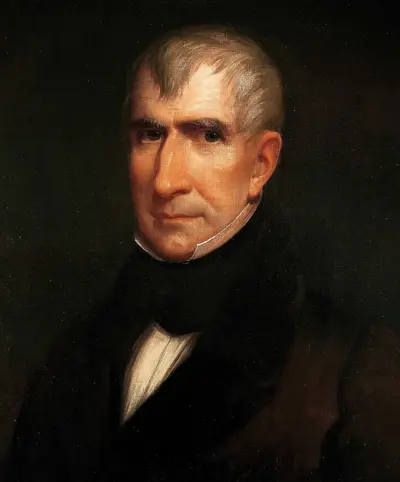
William Henry Harrison was an American military officer and politician who served as the ninth president of the United States for 31 days in 1841, becoming the first president to die in office and the shortest-serving U.S. president in history. His death sparked a brief constitutional crisis regarding succession to the presidency.
