J. Paul Getty Quotes
Some of our newspapers and magazines are more concerned with the welfare of their advertisers than they are with the dissemination of news and the discussion of matters of lasting importance. ...Radio, television, motion pictures, popular books - all contribute...to...the stifling of dissent on all but the most banal levels. ...a renunciation of the most basic and precious of democratic principles.
Getty, J. Paul. How to Be Rich. Playboy Press, 1965, p. 220.


America was entering the First World War as a combatant but there was considerable anti-war sentiment. The Wilson administration over-reacted and instituted many repressive laws and regulations. Leading Americans like Eugene Debs was jailed for several years simply for opposing the war and the military conscription that went with it. Our scientists were not allowed to receive German scientific journals which of course hurt us and not the Germans who read their research and ours.


Sherman felt that the newspapers of North and South fired up hatred of one side against the other and especially in the South, falsely reported the chances of the Confederacy and made rational Southerners who wanted to minimize the death and destruction to their people were made to feel like traitors and cowards.


Vladimir Lenin. Lenin was echoing criticisms that were made the world over and even by some in the United States. However, his solution to have the press controlled by the ruling party just changed the cast of characters who were propagandizing and distorting the truth. Lenin was not able to offer a better solution nor were others. However, with enough affluence the capitalist society produced enough different publishers all competing that one did not dominate public opinion. With technology of TV and the Internet, the bar to entry is so small that almost anyone can be a publisher and find an interested market. In a way technology has solved much of the problem for capitalistic and totalitarian societies alike. In the latter, even censorship is not easy or feasible on a large scale.


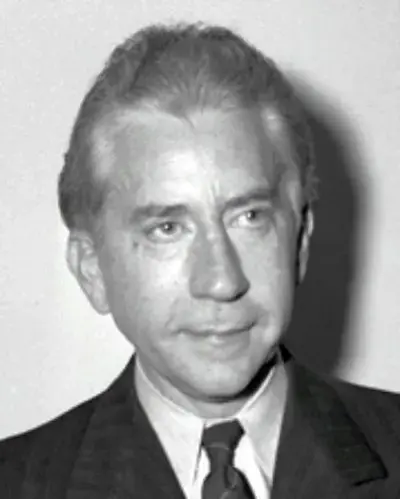
Jean Paul Getty, known widely as J. Paul Getty, was an American-born British petrol-industrialist, and the patriarch of the Getty family. He founded the Getty Oil Company, and in 1957, Fortune magazine named him the richest living American, while the 1966 Guinness Book of Records named him as the world's richest private citizen, worth an estimated $1.2 billion (approx. $7.4 billion in 2019). At his death, he was worth more than $6 billion (approximately $21 billion in 2019). A book published in 1996 ranked him as the 67th richest American who ever lived, based on his wealth as a percentage of the concurrent gross national product.
