Daniel Defoe Quotes
Whatever Party of Men obtain the Reins of Management, and have power to name the Person who shall License the Press, that Party of Men have the whole power of keeping the World in Ignorance, in all matters relating to Religion or Policy, since the Writers of that Party shall have full liberty to impose their Notions upon the World.
Defoe, Daniel. An Essay on the Regulation of the Press. London, 1704.


Vladimir Lenin. Lenin was echoing criticisms that were made the world over and even by some in the United States. However, his solution to have the press controlled by the ruling party just changed the cast of characters who were propagandizing and distorting the truth. Lenin was not able to offer a better solution nor were others. However, with enough affluence the capitalist society produced enough different publishers all competing that one did not dominate public opinion. With technology of TV and the Internet, the bar to entry is so small that almost anyone can be a publisher and find an interested market. In a way technology has solved much of the problem for capitalistic and totalitarian societies alike. In the latter, even censorship is not easy or feasible on a large scale.

Tsvangirai’s party had won the election of 2008, but the Dictator Robert Mugabe refused to relinquish power. Sanctions against Zimbabwe by most of the world pressured Mugabe and Tsvangirai to accept a power sharing arrangement. However, Mugabe once the sanctions were lifted reneged on the agreement. He still controlled the state media which was, according to the 2008 agreement, to be completely non partisan. What this quotation shows is that the dictator maintained his control over the military, the police, and the media and with that really controlled the country.


Prior to Germany Declaring War on the United States, there was a small but influential group of American Fascists who were great admirers of Hitler and Mussolini and the “reforms” they had made in Germany and Italy. They saw Germany’s invasion of other European nations as a good think to “reform” Europe. The opposed American support of England and U. S. entry into the war. Their influence waned after Pearl Harbor and Germany declaring war on the U. S. Many of them arose again after WWII ended but they no longer expressed admiration for Hitler and Mussolini—concentrating at that time on anti-communisim. This caused some difficulties for the majority of anti communists who were also anti fascists.


Samuel Langhorne Clemens, 1835-1910


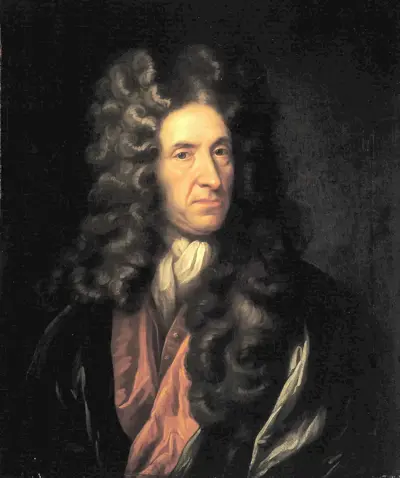
Daniel Defoe was an English trader, writer, journalist, pamphleteer and spy. He is most famous for his novel Robinson Crusoe, published in 1719, which is claimed to be second only to the Bible in its number of translations. He has been seen as one of the earliest proponents of the English novel, and helped to popularise the form in Britain with others such as Aphra Behn and Samuel Richardson. Defoe wrote many political tracts and was often in trouble with the authorities, and spent a period in prison. Intellectuals and political leaders paid attention to his fresh ideas and sometimes consulted with him.
