John Locke Quotes
Where there is no property there is no injustice.
Locke, John. An Essay Concerning Human Understanding. Thomas Basset, 1690, bk. IV, ch. III, sec. 18, p. 281.


Ingersoll was considered to be the greatest orator and political thinker of his day, but his overt atheistic views curtailed his elected political career.


What makes this quotation particularly interesting is that The American Enterprise Institute is a highly conservative “think tank” and Brooks himself, a leading conservative. Usually, conservatives are chided by the rest of the political spectrum for ignoring issues of fairness. In this case, an influential conservative not only admits this, but his article argues that it is desirable not to consider fairness in political decision making. Since conservative parties generally represent the more affluent members of a society, fairness arguments rarely help that constituency and are typically avoided by conservatives. However, few admit that. Here is an exception.


Although English, Cobett spent time in America and published a newspaper, The Porcupine Gazette, in Philadelphia. We was very conservative but on the issue of slavery his resembled a liberal point of view. He never used sugar, coffee, or rum because slave labor produced them. However, he advocated legally enslaving lazy people, blacks and whites, who would not work.


The reason this quotation is important, it was the first time in American history that a President had tied racial discrimination to morality. Before that other Presidents had argued against segregation on pragmatic grounds or on legal, Constitutional grounds. Kennedy’s private moral declaration had a huge impact on Black leaders throughout the country who heard about it by word of mouth. That statement forged a bond between JFK and Blacks while most whites did not see anything striking in the statement.


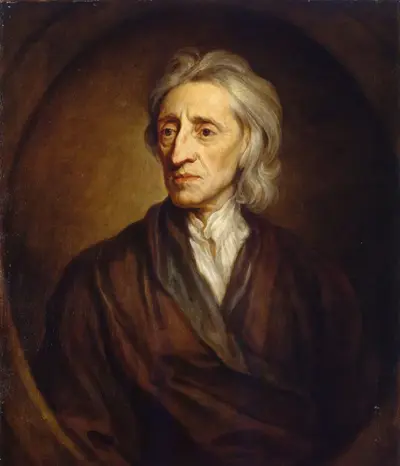
John Locke FRS was an English philosopher and physician, widely regarded as one of the most influential of Enlightenment thinkers and commonly known as the "Father of Liberalism". Considered one of the first of the British empiricists, following the tradition of Sir Francis Bacon, Locke is equally important to social contract theory. His work greatly affected the development of epistemology and political philosophy. His writings influenced Voltaire and Jean-Jacques Rousseau, and many Scottish Enlightenment thinkers, as well as the American Revolutionaries. His contributions to classical republicanism and liberal theory are reflected in the United States Declaration of Independence.
