Thomas Paine Quotes
When the rich plunder the poor of his rights, it becomes an example of the poor to plunder the rich of his property, for the rights of the one are as much property to him as wealth is property to the other and the little all is as dear as the much. It is only by setting out on just principles that men are trained to be just to each other; and it will always be found, that when the rich protect the rights of the poor, the poor will protect the property of the rich. But the guarantee, to be effectual, must be parliamentarily reciprocal.
Thomas Paine, 1737-1809, British American Political Philosopher, Letter to the Addressers, 1792
Sourced by: Eigen's Political and Historical Quotations


Ingersoll was considered to be the greatest orator and political thinker of his day, but his overt atheistic views curtailed his elected political career.

Salisbury was a brilliant, effective prime minister, but he was a snob and not a democrat. See {639131}.


He was warning that the corporations and monopolies were taking advantage of the poor who, if there is not some balance of redress and justice will resort to violence such as the man who just short him. He gave the speech still bleeding with the bullet lodged in his body. He refused to go to a hospital or get medical care until he had finished his speech. See {633076}.

Explanation for his assassination of President William McKinley:
Abrams originated this famous phrase which many have been used subsequently for various “socialized” government benefits that were available to the rich but not the poor. He was referring to the fact that at the time, the government provided housing assistance to the rich by having federally insured mortgages and granting tax deductions for the interest in home mortgages, but there was no assistance to the poor who could only afford to rent and had no tax deductions nor was there any federal public housing assistance. During the Great Recession the phrase was often used when the government gave bail out money to General Motors and the largest banks who were close to bankruptcy, but the landscaping gardener or the hot dog vendor whose business was falling because of the recession were told that is the capitalist system—there are some winners and some losers. The government officials who advocated the bailout did not disagree about the fairness and appropriateness of the Abrams phrase but if they had not bailed the banks out, the entire economic system of the country would probably have collapsed and the ensuing depression would hurt the average worker and the poor even more. Related to the recent “too big to fail” concept.


The crisis of inequality of income and wealth has occurred seven times in American history.


This is one of the proverbs of King Solomon of the Jews, son of King David.

Although Holland was more egalitarian and fairer than most nations of Europe, it was not quite as desirable as Diderot described it. He only visited a part of Holland that was the most educated and affluent.
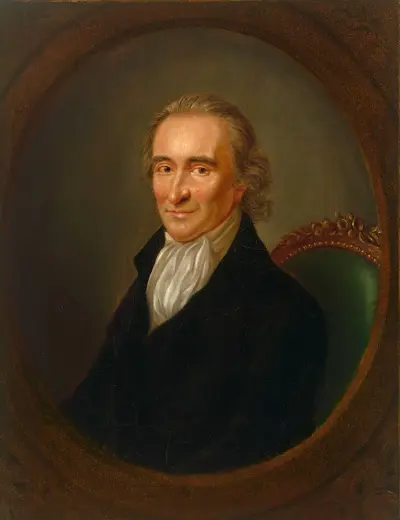
Thomas Paine was an English-born American political activist, philosopher, political theorist, and revolutionary. He authored Common Sense (1776) and The American Crisis (1776–1783), the two most influential pamphlets at the start of the American Revolution, and helped inspire the patriots in 1776 to declare independence from Great Britain. His ideas reflected Enlightenment-era ideals of transnational human rights. Historian Saul K. Padover described him as "a corsetmaker by trade, a journalist by profession, and a propagandist by inclination".
