Pinckney Benton Stewart Pinchback Quotes
I demand simple justice. I am not here as beggar. I do not care so far as I am personally concerned whether you give me a seat or not. I will go back to my people and come here again.
Pinckney Benton Stewart Pinchback, 1837-1921, Governor of Louisiana (Republican), U. S. Congressman & U. S. Senator (not seated), Statement when he was refused his seat because he was Black
Sourced by: Eigen's Political and Historical Quotations

This was actually a very courageous statement for an American politician running for national office. As a result of the pressure of this statement President Franklin Roosevelt allowed Black enlistment in the Army Air Forces.


The issue of slavery which had been suppressed in Congress for the first decades of the nation broke out when Missouri statehood was considered. By previous agreement, slavery was not even discussed in Congress but the time period elapsed. Tallmadge not only proposed that no more slaves could come into Missouri {613176} but most shocking to the Southerners was that every person born in the new state would be free at the age of 25. In a generation, there would be no more slavery in Missouri and there would be no economic compensation for slave owners at all. The House of Representatives accepted the amendment, but it failed in the Senate. At that time, Senators were not elected by voters but were appointed by the state legislators and the Southern slave states had a disproportionate share of the senate from a population point of view. But what this quotation shows clearly that a majority of the country in 1819 were opposed to slavery and were willing to end it without compensation.


Southerners and some others wanted to discriminate and fought civil rights legislation. The excuse they gave for opposition was that the Federal Government was usurping the power of the states to determine what civil rights people of the state would have. Shellabarger made it clear that the civil rights bill would not require ANY rights to be given. It just required that if the states granted rights, they could not discriminate by race as to those rights. But the states were free to decide which rights all citizens of the state would have. See {623473} .


He was not only an atheist himself, but he was a major opponent of organized religion which he regarded as one or the major initiators and drivers of slavery, segregation and discrimination. For this reason he was critical of Martin Luther King—{583307}. His irreligiosity had always prevented his gaining much support from his fellow African Americans even though a great writer like H. L. Menken considered Schuyler, "the best writer in America".

President Johnson said this after a meeting with governors from the South and border states, who had criticized his policies on civil rights as well as his vocal support of expanded rights for blacks


The President often referred to this statement as an example of his wife’s acumen. She had been born to a Southern plantation and inherited the land and the slaves. Her view, and his, were typical of the Southern point of view in early America.


Moss and two other blacks had had the temerity to open a grocery store. White competitors attempted to have the city authorities close the store. When that failed, a mob took the three Black owners to the city limits and shot them all to death. Moss was a close friend of Ida B. Wells, and his lynching started her on her no famous anti-lynching expose and campaign. See {44393} for her initial response.


Although Wedgwood was a business man and ceramic manufacturer, he was a staunch abolitionist. He made these medallions by the thousands and gave them to all who would receive them. The text became the motto of the anti-slavery society. It was one of the first examples of a logo – a symbol for a political cause being very effective.
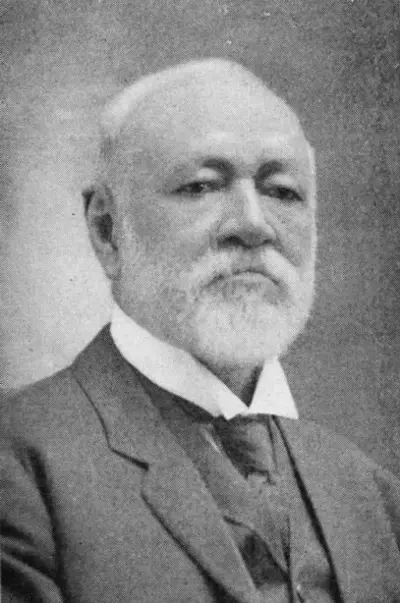
Pinckney Benton Stewart Pinchback was an American publisher and politician, a Union Army officer, and the first African American to become governor of a U.S. state. A Republican, Pinchback served as the 24th Governor of Louisiana from December 9, 1872, to January 13, 1873. He was one of the most prominent African-American officeholders during the Reconstruction Era.
