Benjamin Franklin Quotes
Where liberty dwells, there is my country.
Benjamin Franklin, 1706-1790, Member of the Continental Congress & the Constitutional Convention, Governor of Pennsylvania, President of the Pennsylvania Assembly, U.S. Minister to France, Postmaster General of the American Colonies, Letter, 1785
Sourced by: Eigen's Political and Historical Quotations


For his seditious activities he was sentenced to penal servitude for life. He escaped and came to America where he entered politics


In most revolutionary settings leaders have to persuade people who have voted with no success to turn to the rifle. In Ireland at this point, almost all the nationalsits knew that the rifle would help them but they were not sure that a vote would have the effect of a bullet.

South America, invaded and colonized by Spain was a brutal combination of slavery and repression. Even the European colonists suffered under the terrible combination of exploitation, militarism and religious dictatorship. Independence from Spain was equally bloody as unlike in North America where the fight was against British rule, in South America the black slaves, the indigenous Indians and the white colonists all had scores to settle with the Spanish rulers. And the Spanish in turn realized that and brutally repressed all rebellion attempts. Atrocities were common, and committed by almost all, including even idealists like Bolivar.


Trumbo was morally opposed to war. He also refused to name Hollywood communists to Congressional Committees during the Red Scare. He was then blacklisted from his occupation, screen writing.

1st Earl of Chatham. The Continental Congress had endorsed and sent to England a set of resolutions from Suffolk County, Massachusetts, drawn up by Joseph Warren. Legislators forever since have admired the logic and presentation of the case for America. The King and the Prime Minister failed to heed Pitt’s view, and the Declaration of Independence and the American Revolution followed.


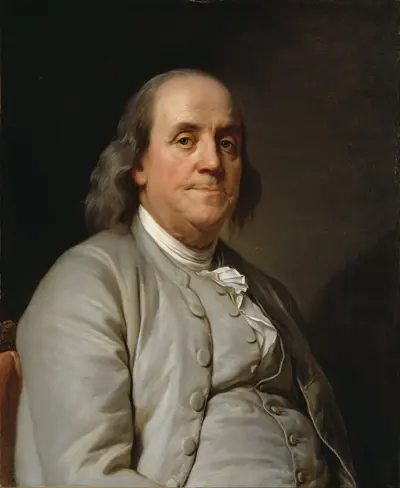
Benjamin Franklin FRS FRSA FRSE was one of the Founding Fathers of the United States. A polymath, he was a leading writer, printer, political philosopher, politician, Freemason, postmaster, scientist, inventor, humorist, civic activist, statesman, and diplomat. As a scientist, he was a major figure in the American Enlightenment and the history of physics for his discoveries and theories regarding electricity. As an inventor, he is known for the lightning rod, bifocals, and the Franklin stove, among other inventions. He founded many civic organizations, including the Library Company, Philadelphia's first fire department, and the University of Pennsylvania.
