Arthur H. Smith Quotes
Whenever a Christian has a dispute with a heathen, no matter what the subject in question may be, the quarrel is promptly taken up by the priest, who if he cannot himself intimidate the local officials and compel them to give right to the Christian, represents the case as one of persecution when … it is appealed. Then is redress rigorously extorted, without the least reference to the justice of the demand.
This quotation helps to explain the 19th and 20th century hostility of many Chinese to Missionaries and Christians. The missionary involvement in and interference with the Chinese justice system, together with their one-sided advocacy for Christians regardless of rectitude developed a resentment by the majority of Chinese who had a tradition of religious tolerance—see {34001}.
Arthur H. Smith, 1845–1932, American Missionary in China, American Board of Missionaries, ~1899
Sourced by: Eigen's Political and Historical Quotations


In 1877 Wasburn was dropped from the List of Ministers by the Unitarian Church. He had become very critical of organized and orthodox religion of all kinds.


In this speech, and in {634756}, he argued against unification to a public that was mostly opposed. The leadership was interested because they were facing the Muslim Ottoman Turks who were getting more powerful each day. The Eastern Emperor, Constantine XI, more of a soldier and politician than a cleric, wanted the military strength of the Franks and other Western European Christian armies to help protect the Eastern Empire and Byzantium and were willing to reunite under the Pope to get it. Gennadios and his faction were not. They prevailed and the next year, the Muslims conquered Byzantium which had little help from the armies of the Western Roman Empire.


It took only 10 days after the First Continental Congress met for religious bigotry to arise. After hundreds of years of Catholic/Protestant strife, each sect looked upon the other, not only as theologically wrong, but dangerous to the liberty of the other. Unfortunately, the organied religions had acted so badly towards other religions, that everyone was justified in fearing the other religions. This quotation illustrates a then typical attitude of many American Protestants that the Catholic Church was a threat to national security. Ironically, in modern times, anti-Catholic bigots use this quotation to demonstrate that the United States was founded as a Christian Protestant nation—not a general Christian nation. A small, vicious anti-Catholic sentiment still exists, usually by a minority of right wing Protestant religious fundamentalists. Protestant England had just repealed the laws making Catholicism illegal, but this was regarded at that time as intolerable for the new America. This was one of the disputes which that the Founding Fathers were faced with later and one of the reasons that they were so absolute in the need for the 1st Amendment.

It is this verse that for some Muslims justifies terrorism against non-Muslims. See {584354} for a specific example. There are similar provisions in the Old Testament which a few extremely conservative Jews and Christians have used to advocate for blasphemy being a capital crime. Note that if an unbeliever repents and becomes a Muslim, he should be spared.


Hume is one of the first to observe that if a society would be religiously pluralistic, the ruler and government had best separate itself from all of the religions. He uses the phrase “preserve a very philosophical indifference.” The Founding Fathers were familiar with Hume’s work and of his treatises were available to them in a Philadelphia library during the Constitutional Convention in 1787.

What the historian did not know was how similarly the Protestants would behave against the Catholics when they had the power. Since the Catholics were the established church, and the Protestants the new “heretics” the Protestants were on the receiving end of most of the atrocities at the beginning. However, as if they had been scholled by their horrible experiences, they repeated them just exchanging the perpetrators and the victims.

The implication of a double moral standard for adherents of the faith and for others has been characteristics of many religions.
Islam was not very strong at this point and the followers of Muhammad were relatively few and Medina area contained Arab Non-Believers, Jews as well as the new Muslims. Muhammad drew up this document and got the non Muslims to agree to it. What is fascinating is that they bought into the idea that Muhammad would be the judge and final arbitrator of all disputes that were not resolved locally. The non Muslims agreed to this because Muhammad had been judging disputes for several years for those who would submit their cases to them. In a time of inconsistency, corruption, capriciousness and arbitrariness, Muhammad had developed a remarkable reputation for fairness, consistency, objectivity, and complete honesty. He could not be bought as most judges were at the time. He simply had demonstrated that he was the best man for the job.

He is a Greek Orthodox Christian, and he correctly observes that the Islamic world was considerably more tolerant than the Christian until the 18th century when Islam had become less tolerant in the Middle East while the Christians were modernizing and going through a cultural and intellectual enlightenment and societal modernization while the Muslims, became less tolerant than they were in earlier years leading to the modern situation.


Damn this world, Damn this time. Damn this fate That uncivilized Arabs have come to make me a Moslem
This is a huge epic poem that he wrote over several years. At the time, the Persians considered themselves far more civilized and sophisticated than the Arabs who were but tribesmen. They really resented the fact that it was the Arabs that brought Islam. And before, most of the Persians worshipped Zoroaster. Although Islam spread faster and further than any religion in history, it was not always easily accepted as this stanza of the poem indicates. There is to this day a superiority that the Iranians perceive over the Arabs. And to this day, many Arabs resent the Iranians for this attitude.
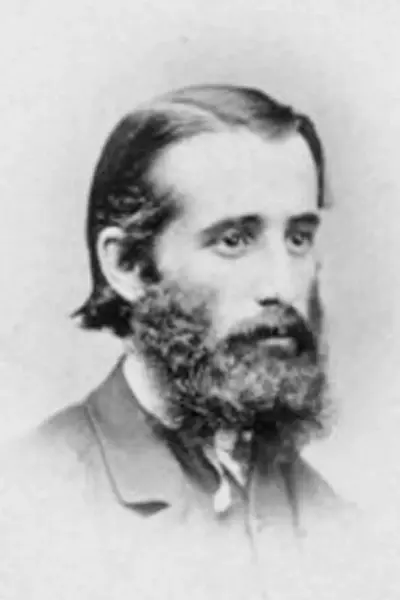
Arthur Henderson Smith (Chinese name: 明恩溥; pinyin: Ming Enpu) was a missionary of the American Board of Commissioners for Foreign Missions noted for spending 54 years as a missionary in China and writing books which presented China to foreign readers. These books include Chinese Characteristics, Village Life in China and The Uplift of China. In the 1920s, Chinese Characteristics was still the most widely read book on China among foreign residents there. However, it has been noted by later scholars, including Timothy Cheek in his book The Intellectual in Modern Chinese History, that Smith’s work exemplified the ‘thinly disguised racism’ contained in the writings of many Protestant missionaries in China at that time.
