David Hume Quotes
If he [the ruler] admits only one religion among his subjects, he must sacrifice, to an uncertain prospect of tranquility, every consideration of public liberty, science, reason, industry, and even his own independence. If he gives indulgence to several sects, which is the wiser maxim, he must preserve a very philosophical indifference to all of them and carefully restrain the pretensions of the prevailing sect; otherwise he can expect nothing but endless disputes, quarrels, factions, persecutions, and civil commotions
Hume is one of the first to observe that if a society would be religiously pluralistic, the ruler and government had best separate itself from all of the religions. He uses the phrase “preserve a very philosophical indifference.” The Founding Fathers were familiar with Hume’s work and of his treatises were available to them in a Philadelphia library during the Constitutional Convention in 1787.
David Hume, 1711-1776, Scottish Philosopher & Historian, Dialogues Concerning Natural Religion
Sourced by: Eigen's Political and Historical Quotations


It is an error to say that. It is an error to say that He was the last Pope to hold temporal power. Years later, the Vatican rejected this view and adopted the modern concept of freedom of conscience. See {612714}.


The same phrase was used by Count de Montalembert at a Catholic conference in Malines, August 20, 1863, and is sometimes attributed to him.

This quotation is one of the first to make the critical observation that the only time that tolerance of a religion is necessary is when there is an established church and others that deviate from it. If there is no established church, as the Founding Fathers envisioned, there is no preeminent church to do the tolerating. All are equal. In practice, Protestant churches were proportionately dominant in early America and up through the 20th century. So most of the issue of tolerance problems in America were cultural. And there is still a minority of Christians who believe that America should be a Christian country and other religions should be “tolerated.” However, Clinton and most of the founders did not want to see even general Christianity established as the national religion even they it was the majority religion.


Quintus Septimius Florens Tertullianus

Samuel Langhorne Clemens, 1835-1910

Williams was the first theologian who not only advocated religious toleration but argued that Christianity demanded it and the separation of church and state.

He is a Greek Orthodox Christian, and he correctly observes that the Islamic world was considerably more tolerant than the Christian until the 18th century when Islam had become less tolerant in the Middle East while the Christians were modernizing and going through a cultural and intellectual enlightenment and societal modernization while the Muslims, became less tolerant than they were in earlier years leading to the modern situation.
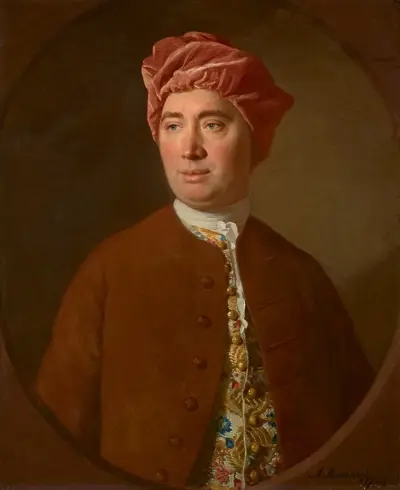
David Hume, Hume strove to create a naturalistic science of man that examined the psychological basis of human nature. Hume argued against the existence of innate ideas, positing that all human knowledge derives solely from experience. This places him with Francis Bacon, Thomas Hobbes, John Locke, and George Berkeley as a British Empiricist.
