Robert Baird Quotes
The freedom allowed in the United States to all sorts of inquiry and discussion necessarily leads to a diversity of opinion, which is seen not only in their being different denominations, but different opinions also in the same denomination.
Robert Baird, 1798-1863, Religious Historian, Religion in America 1856
Sourced by: Eigen's Political and Historical Quotations


At the time there was an issue of religious freedom that is in public discourse: It emanated from the Obama Care law which required employers to provide health insurance that does not discriminate against women by refusing to disallow coverage for birth control (pills, diaphragms, etc.) This legislation covered the employees of general institutions run by religions such as schools, hospitals, and retirement communities. Roman Catholics and other religions which viewed birth control as a sin were put in a position where they had to pay for something that they regarded as sinful. So the church did not have complete religious freedom. However, if these institutions would deny to their employees a basic right that the law says belongs to all institutions. If an exception would be made for birth control what about blood transfusions. The Jehovah’s Witnesses believe that autologous blood transfusions are contrary to the world of God. So what if institutions they run decided to not cover these transfusions in their insurance policies? Or a Jewish University or a Muslim cultural center decided not to cover medical procedures in hospitals that serve pork? There have been many examples where one religion’s freedom has been curtailed slightly when they conflict with individual rights or other rights. Plural marriage for Mormons and Muslims are against the law. Christian Scientists have been forced to provide medical care for some members even though their religion prohibits it. There is no solution that will not curtail someone’s rights under some circumstances.


This book is endorsed by major religious organizations of all faiths as well as National School Boards Association, National Education Association, National PTA, National Association of Secondary School Principals, National Association of Elementary School Principals, American Association of School Administrators and others. It is used as a guideline by most schools systems in the United States.

Pen name: Jack Nipps. Leland was a Baptist evangelist who had worked with Thomas Jefferson and James Madison to secure Freedom of Conscience in Virginia. Many people think that ideas such as this are the views of irreligious men and women, but Leland was a devout, evangelical Baptist and Baptists suffered discrimination in early Colonial America. Freedom of conscience was essential for all religions who were not in the local majority. Tolerance essential. See 43,065.


Abdul Rahman, Afghan citizen, had converted from Islam to Christianity 16 years before. Conversion from Islam is a capital crime under Sharia Law which was the law of Afghanistan even after the Taliban had been overthrown. He was jailed and threatened with death. Statements like this and others made directly to the government persuaded the Afghan politicians to go against their mullahs who demanded the death penalty as is proscribed by Islamic Law—Sharia. The judges tried to get Rahman to recant and he would not (see {589518}). So they finally decided that he must be mentally insane and therefore could not be tried, and the problem was solved that way.


The Governor had issued a Thanksgiving day proclamation that was very sectarian.

It is an error to say that. It is an error to say that He was the last Pope to hold temporal power. Years later, the Vatican rejected this view and adopted the modern concept of freedom of conscience. See {612714}.

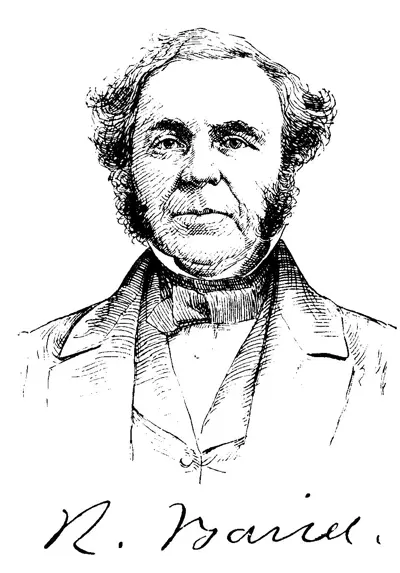
Robert Baird was an American clergyman and author. He was born in Fayette County, Pennsylvania, near Pittsburgh, and graduated at Jefferson College in 1818 and at Princeton Theological Seminary in 1822. He taught at an academy at Princeton, New Jersey for five years while tutoring at the College of New Jersey and preaching occasionally. (In 1824, he helped to create the Chi Phi Society, a semi-religious, semi-literary organization, which ceased activity the following year when it merged with the Philadelphian Society.) In 1827 Baird became a New Jersey agent for the American Bible Society, distributing Bibles among the poor and laboring among destitute Presbyterian churches. His survey of educational deficiencies eventually led to the introduction of a system of public education in New Jersey.
