Ahmed Rustem Bey Quotes
When she [Turkey] declared that she meant to observe a strict neutrality she was perfectly sincere. It is true that she ordered at the same time a general mobilization, but this was in the nature of a precautionary measure destined to safeguard the security of her territories. A painful experience has taught her … she can be at any time the sudden victim of armed aggression. It is because she would not allow herself any more to be overtaken by such a contingency that she called her entire manhood to arms. It is also true that a German mission headed by General Liman von Sanders is in charge of the reorganization of her land forces, but that does not mean, as some believe, and others, less ingenuous, affect to believe, that she has abdicated into its hands. Turkey has a great regard for Germany, as it seems to me every other nation must have which is not absolutely blinded by prejudice; and may have considered at one time or another the advisability of cooperating with her; but she is not at her beck and call, and has never been.
This classic, but feeble, claim that Turkey was going to be neutral in WWI. He the ambassador admitted that Turkey had mobilized all its male population, and that a German General on active duty was in command of the Turkish army for “training”, yet they intended to be neutral. Shortly thereafter Turkey and Germany announced an axis alliance which was a great foreign policy blunder for Turkey. Then they (with Germany) lost the war, the Ottoman Empire was broken up in the peace treaty and Turkey went from a huge empire to just a country. Incredibly, later in WWII Turkey made the same blunder and allied and fought with Hitler and Germany again.
Ahmed Rustem Bey, 1862-1935, Turkish Ambassador to the United States, Protestation that Turkey was no in the German Camp at the beginning of WWI, The Position of Turkey, 1914
Sourced by: Eigen's Political and Historical Quotations

The “proofs” were diplomatic assurances—treaties—that England would guarantee the territorial integrity of Belgium. The British made strong diplomatic efforts to persuade Germany not to occupy Belgium. The German’s none the less send armies in under the excuse that if they did not, the French would occupy the country and have a strategic advantage over them. Diplomacy could do no more good. England had to send troops or renege on its obligations. So England was in WWI.


Hitler ridiculed the letter after receiving it in public speech.
Germany had demanded that Belgium allow German troops to cross Belgium to the French frontier. However, King Albert was concerned that this would be a de facto German occupation of Belgium and asked for help. The British tried diplomacy but things were out of anyone’s control and the First World War ensued.

This is the kind of threat that was used by Germany before the First World War. It worked with Turkey, but King Albert realized that being an “ally” of Germany meant losing independence anyway. Belgium would not join Germany, so the Germans invaded Belgium in 1914. Belgians fought with the allies and at the end of WWI, they were able to rebuild their independent state and thrive until they were again invaded by Germany in WWII. Turkey, in contrast, lost their entire empire, as a result of their fighting as German allies in WWI.


This was the classic German method of invading a neutral country. First they claim that they have good information that their enemy, in this case France, is going to March through Belgium to attack Germany. Then they state that the Belgians are too weak to prevent this breach of their neutrality. Therefore, Germany as an act of “self defense” must send troops into Belgium to repel the French. The Belgians of course objected and stated that they would maintain their neutrality (see {613959} ) but the Germans then invaded the next day and could not understand why the world considered it aggression.
This referred to ships being torpedoed by the German U-Boats in the poster.

“Lebensraum” was a German expansionist concept of the time which has no good English translation. Literally, it means “living room”. The Germans had this notion that the German race and nation had to have more land to accommodate the growth of the German people. And because the Germans were a superior race, they were entitled to the land surrounding Germany in which to have Germans grow and thrive. The “inferior” peoples who lived on the land could be exterminated so that Germany would have this expansion room. The “Death’s Head units” were special German elite troops who used the Death’s Head as a symbol on their uniforms. Some of the Generals were concerned that the rest of the world would condemn Germany and possibly interfere if they exterminated the Poles. Hitler pointed to the example of the Turks who had killed most of the Armenians in the Armenian Genocide in the early 20th century. They got away with it with no outside interference, and there were no international consequences for Turkey. Hitler, convinced that the Armenian genocide was the precedent, thought Germany could easily get away with murdering the Gypsies, seriously handicapped, homosexuals, Russians, Poles and Jews. For other quotations on the Armenian Genocide, see {51838}, {638251}, {620602}, {620603}, {620604}, {620605}, {620600}, and {620606}

He was announcing the arrest of an agent of the Iranian Government who was plotting to assassinate the Saudi Arabian Ambassador to the United States.

His definition of Russian territory included any area that the Czars claimed which included Poland, the Baltic States, the Ukraine, the Caucuses, but at the time of the speech, Russia was fighting to keep its existing territory.


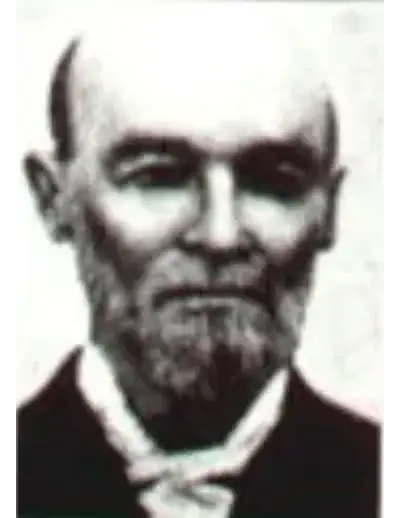
Ahmet Rüstem Bey (1862–1934), born Alfred Bilinski, was an Ottoman diplomat who served as last Ottoman ambassador to the United States in 1914. Despite neither of his parents being ethnically Turkish, he himself was an ardent Turkish nationalist. He was "exceptionally high-strung and outspoken" and had a "propensity to challenge people to duels". Prior to his appointment as ambassador, he had already served twice in the United States capital, both times leaving in a hurry.
