Ambrose Bierce Quotes
What is a democrat? One who believes that the republicans have ruined the country. What is a republican? One who believes that the democrats would ruin the country.
Ambrose Bierce, 1842-1914?, Journalist & Political Columnist, Wasp, August 27, 1884
Sourced by: Eigen's Political and Historical Quotations


Actually, it was the Tea Party members of the Republican Party whose unprecedented willingness to risk the full faith and credit of the United States when the majority of the Republican legislators and almost all the Democrats were not, who held the required Debt Ceiling Increase hostage to getting their legislative way. But in this particular debate and legislation the Democrats gained nothing except that the anger of the American People was much greater against the Republicans than the Democrats, many of whose usual supporters thought that the Democrats had been totally intimidated by the Tea Party.


The Tea Party Republican faction was opposed to government doing much of anything other than Defense and Foreign Policy. The regular Republicans saw a much more extensive and robust role of government though few did so to the same extent as Abraham Lincoln and the other founders of the Republican Party, and Theodore Roosevelt and Dwight D. Eisenhower the Republicans following in the Alexander Hamilton tradition.

After he went to West Point, Eisenhower was very non-political until Republican leaders invited him to run for the Presidency as a Republican.

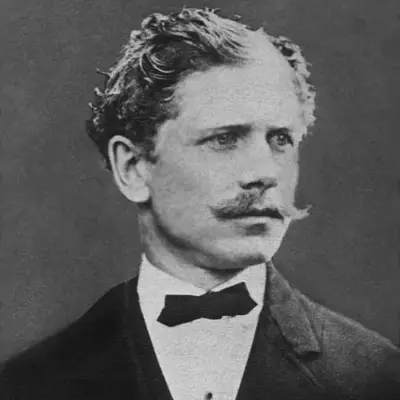
Ambrose Gwinnett Bierce was an American short story writer, journalist, poet, and Civil War veteran. His book The Devil's Dictionary was named as one of "The 100 Greatest Masterpieces of American Literature" by the American Revolution Bicentennial Administration. His story "An Occurrence at Owl Creek Bridge" has been described as "one of the most famous and frequently anthologized stories in American literature"; and his book Tales of Soldiers and Civilians (also published as In the Midst of Life) was named by the Grolier Club as one of the 100 most influential American books printed before 1900.
