Josip Broz Tito Quotes
What are the phenomena of nationalism? Here are some of them: 1) National egoism, from which many other negative traits of nationalism are derived, as for example — a desire for foreign conquest, a desire to oppress other nations, a desire to impose economic exploitation upon other nations, and so on; 2) national-chauvinism which is also a source of many other negative traits of nationalism, as for example national hatred, the disparagement of other nations, the disparagement of their history, culture, and scientific activities and scientific achievements, and so on, the glorification of developments in their own history that were negative … And what are these negative things? Wars of conquest are negative, the subjugation and oppression of other nations is negative, economic exploitation is negative, colonial enslavement is negative, and so on. All these things are accounted negative by Marxism and condemned. All these phenomena of the past can, it is true, be explained, but from our point of view they can never be justified
Josip Broz Tito, 1892-1980, President of Yugoslavia, Speech at the Slovene Academy of Arts and Sciences, Ljubljana, November 26, 1948
Sourced by: Eigen's Political and Historical Quotations


What makes the situation even more complicated is that most of the land of the Middle East has been governed by a succession of Empires who may have drawn the lines differently from the previous governing dynasty. For example, the land that is Israel today, has been governed by Egyptians, Greeks, Jews, Romans, various Arab dynasties, Turkey, England, and the Jews again. Turkey governed it for the longest period.

Note that Herder regarded foreign impressions and learning as not only desirable but important. Most extreme nationalists are xenophobic and fear any knowledge, law, ideas or understandings of other nations and cultures. Even in the United States, there are a few Americans who are terribly distressed whenever one of the participants in a legal case cites an opinion or study done in another country.


Barre, who had served as an officer in North American fighting with the Americans against the French, was a major opponent of the Stamp Act and other efforts to tax the American colonies. In the debate one of his opponents referred the American colonies as “planted by the care of England” and “nourished” by the mother country’s care. Barre was imprisoned in the Tower of London for a while for his vigorous defense of the American colonists.


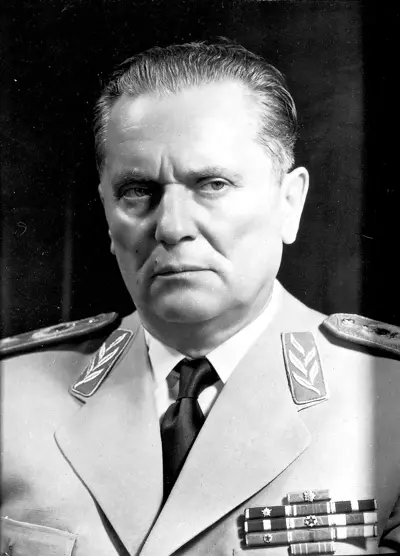
Josip Broz, commonly known as Tito (/ˈtiːtoʊ/; Serbo-Croatian Cyrillic: Тито, pronounced [tîto]), was a Yugoslav communist revolutionary and statesman, serving in various roles from 1943 until his death in 1980. During World War II, he was the leader of the Partisans, often regarded as the most effective resistance movement in occupied Europe. He also served as the president of the Socialist Federal Republic of Yugoslavia from 14 January 1953 until his death on 4 May 1980.
