Karl Marx Quotes
The existence of the state is inseparable from the existence of slavery.
Marx, Karl. "Critical Marginal Notes on the Article 'The King of Prussia and Social Reform. By a Prussian'." Karl Marx, Frederick Engels: Collected Works, Vol. 3. International Publishers, 1975, p. 198.

As a result of the programs and philosophy he expounded, Leontiev joyously predicted:
The Nationalist/Fascist views in the Spanish Civil War were so gross that they actually hurt the Nationalist cause in International opinion. See {592113} for another example. Despite the facts, most of the Western world was not then knowledgeable about the evils of Fascism and distrusted democracy, socialism, and communism more.


Referring to the Arawak natives he found when he landed in the "new world—San Salvador:"
Toward the end of the 19th century Cambodia became a protectorate of France. One of the first things that the French did was abolish slavery. There was a general rebellion as few in Khmer society wanted change of any kind.

Referring to Black Congressman Julian Bond: Louis Eugene Walcott


This was written under the name of Ragnar Redbeard. There are a few scholars who believe that it was written by Jack London, but most credit Desmond.

Many social scientists believe that this is one of the reason for so much racism amongst the lower class whites. If blacks are “below” them, the poor whites have power and are not at the bottom of the sociological pyramid of society. To many this is better than being better off themselves but starring the bottom with the Negroes.


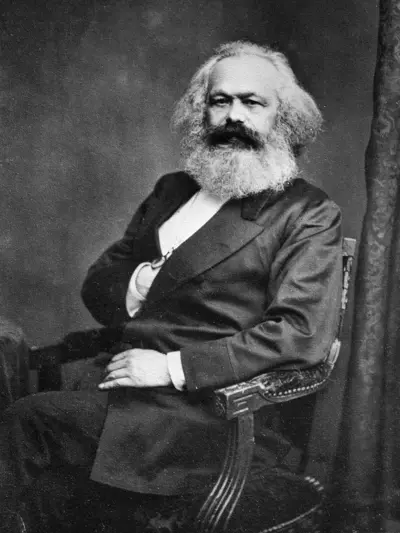
Karl Heinrich Marx was a German philosopher, economist, historian, sociologist, political theorist, journalist and socialist revolutionary. Born in Trier, Germany, Marx studied law and philosophy at university. He married Jenny von Westphalen in 1843. Due to his political publications, Marx became stateless and lived in exile with his wife and children in London for decades, where he continued to develop his thought in collaboration with German thinker Friedrich Engels and publish his writings, researching in the reading room of the British Museum. His best-known titles are the 1848 pamphlet The Communist Manifesto and the three-volume Das Kapital (1867–1883). Marx's political and philosophical thought had enormous influence on subsequent intellectual, economic and political history. His name has been used as an adjective, a noun, and a school of social theory.
