Dario Fo Quotes
We thought the church had withdrawn from interfering in Italian politics... but instead there is a terrible resurgence. These are ugly signs for freedom of expression.
"Nobel winner Dario Fo attacks Catholic Church." Reuters, 21 Aug. 2007.

This was the third of her books that were banned in Bangladesh.


While the Visigoths had some very advanced legal principles, this law, quoted in its entirety is typical of the nations that were part of the Catholic world. The church and its doctrines were immune from any possible criticism, explicit or implicit. This is the most formalized and sophisticated compendium of laws of the so-called “barbaric peoples” of Europe. The compilation was in many ways a documentation of the traditional laws of the Visigoths that had evolved over hundreds of years.


In 1877 Wasburn was dropped from the List of Ministers by the Unitarian Church. He had become very critical of organized and orthodox religion of all kinds.

Ironically, without the word “wicked” most people would regard the first sentence as a good description of elements of a modern democracy. It illustrates that for the Islamic fundamentalist democracy substitutes the rule of man for the rule of God, freedom of speech allows heresy and blasphemy to to uttered and communicated, and religion which is supposed to inform and direct politics. So what is good for the lover of democracy is the very thing that is bad for Islam. This is not a uniquely Islamic viewpoint. It has been and is held by fundamentalist Christians and Jews as well who would return to Biblical law punishing blasphemy and heresy with death and have religion drive all politics.

Williams was the first theologian who not only advocated religious toleration but argued that Christianity demanded it and the separation of church and state.

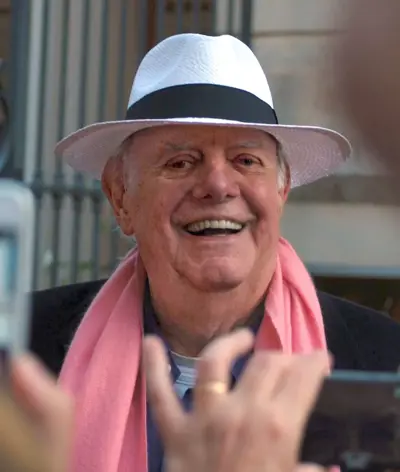
Dario Luigi Angelo Fo was an Italian actor, playwright, comedian, singer, theatre director, stage designer, songwriter, painter, political campaigner for the Italian left wing and the recipient of the 1997 Nobel Prize in Literature. In his time he was "arguably the most widely performed contemporary playwright in world theatre". Much of his dramatic work depends on improvisation and comprises the recovery of "illegitimate" forms of theatre, such as those performed by giullari (medieval strolling players) and, more famously, the ancient Italian style of commedia dell'arte.
