Charles Curtis Quotes
We [the Kaws] wanted to appeal to the white man, and I could speak English. I was lithe and active, and young as I was, the chief of the tribe thought I could be entrusted with the important message. I ran and walked for miles, summoning help for the besieged tribe.
Curtis was part Kaw Indian brought up on the Reservation. He never hid the fact that he was part Indian and that didn’t seem to have affected his brilliant career.
Charles Curtis, 1860-1936, Vice President of the United States (Republican), Herbert Hoover’s Vice President, U. S. Congressman & Senator (Republican, KS), Description of his first involvement in politics when a young boy
Sourced by: Eigen's Political and Historical Quotations

The central Indian policy problem for Jefferson’s Administration was the fact that most Indians hunted for subsistence and the amount of land needed to support a hunting society was per capita much greater than an agricultural and especially an industrial one. Jefferson had no personal animosity against the Indians as many in his day did. But he perceived the need to obtain Indian lands for white agricultural use.

The Arab culture, like most desert cultures, maintains a degree of hospitality that is much greater than that of most other cultures. Even enemies are granted hospitality. This sometimes confuses Western diplomats who might interpret the friendly hospitality as institutional friendship but it often is nothing more than the gracious hospitality that is expected in Arab society.
Despite Jefferson’s reasonable intentions towards the Indians, all the boundaries never did get fixed and existing agreements and treaties were abrogated usually by whites acting illegally but then were supported by their state government and if serious hostilities broke out, the Federal government usually entered the fray to defend the whites regardless of whether or not they abrogated the treaties. Some Indian nations complicated the situation by having a tradition of raiding neighbors and stealing horses or other goods. Whites, insisting on then rather severe “English type” law enforcement often inadvertently, started an Indian war with the Federal soldiers almost always defeating the Indians leading to yet another treaty by which the Indians were pushed from their land, Further, many whites “bought” lands from Indians in good faith while the Indians did not own the lands, thought that they were selling hunting rights as they had no tradition of property ownership. The consequence was tragic history which Jefferson and his successors failed to manage well.


a Shoshone Indian woman who accompanied Lewis and Clark in exploring the Louisiana Territory


Jefferson probably had the most enlightened policy towards the Native Americans and did not see them as a people apart from Americans. His phrase “we consider them as part of ourselves” would not be concurred with by another American President for over 100 years. Unfortunately, there were many American whites who did not have Jefferson’s view, and there was no practical way the Federal Government at the time could enforce benign and equality policies. Relations with most Indian tribes went down hill and may have reached the lowest point under the Administration of Andrew Jackson.

Little Wolf led 300 Cheyenne off the Reservation. The soldiers followed but never could catch the Indians. Little Wolf made good the escape to Montana where he was allowed to stay. Later, he worked as a scout for the Army.


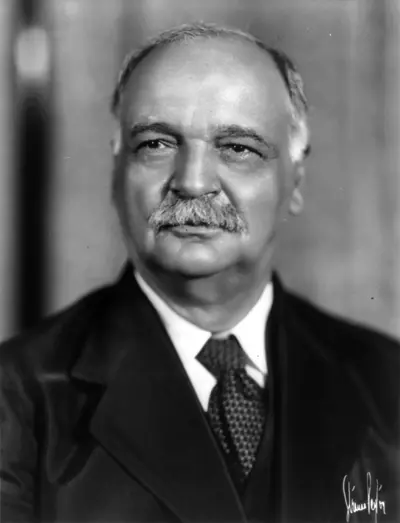
Charles Curtis was an American attorney and Republican politician from Kansas who served as the 31st vice president of the United States from 1929 to 1933. He also previously served as the Senate Majority Leader from 1924 to 1929.
