Palmiro Togliatti Quotes
We not only defend the Soviet Union in general. We defend concretely its whole policy and each of its acts.
This blind defense of all Soviet policies and actions by non-Soviet communist parties was typical of the day. Politics became so polarized that throughout the world, political groups took sides and defended or tolerated whatever acts their “allies” engaged in.
Palmiro Togliatti, 1893-1964, Italian Communist Party Leader and Cofounder, Chief, Spanish Cominterm, Speech, International Cominterm Congress, 1935
Sourced by: Eigen's Political and Historical Quotations


At the Seventh World Congress of the Comintern in 1935 the new Popular Front policy was announced. To communist hard-liners and to the far left, the policy was an abandonment of the Marxist revolutionary line.

Commenting on political parties in Cuba:


Richard Moore, a black attorney, was representing August Yokinen, an immigrant Finn who belonged to the Communist Party, before a “Workers Court” in Harlem, New York. Yokinen was charged with treating three Black men with a lack of courtesy and accused of being a racist, capitalist, and a white chauvinist. Moore requested that Yokinen be given clemency seeing how expulsion from the party would be too extreme. The “worker jury,” however, unanimously decided to expel him.


Lev Davidovich Bronstein. Unfortunately, such party loyalty was not limited to the Communists. Excessive and unconditional party loyalty, and the extreme partisanship that goes with it, plagues many American politicians to the detriment of the country.

This quotation illustrates the statements of White that caused conservatives to dislike him. However, most historians agree that White passed classified information to the Russians. He was accused of being a Communist, but there was never any evidence of that. Some people believe that he was a spy for the Russians and committed espionage, but others disagree observing that White was very much his own man and felt that much information that was classified never should have been. White substituted his own judgment, it is believed, about what could be given to the Russians for the security system. He was an admirer of what Russian socialism had accomplished economically, educationally and medically since the 1917 revolution deposing the Czar. Russia had been a valuable military ally, which had taken the brunt of both military and civilian casualties in WWII. White’s economics were certainly not Marxist but very much Keynesian. He was subpoenaed by the House Un-American Activities Committee where he was accused of being a Communist which he denied (see {634907}). He died of a heart attack 3 days later.


While he disagreed with Russian policies in any cases, he kept his criticism private but strove to maintain Yugoslavia as a Socialist state and part of the Soviet lock but independent. As his policies more and more deviated from Russian policies, Stalin tried to have Tito assassinated as Tito had his own independent policies on relations with the West.

This quotation illustrates White’s extreme naivety about Stalinist Russia. At the time the Soviet Union had been backing communist insurgencies blatantly in China, Greece, and Korea for example. Most historians agree that White passed classified information to the Russians. He was accused of being a Communist, but there was never any evidence of that. Some people believe that he was a spy for the Russians and committed espionage, but others disagree observing that White was very much his own man and felt that much information that was classified never should have been. White substituted his own judgment, it is believed, about what could be given to the Russians. He was an admirer of what Russian socialism had accomplished economically, educationally and medically since the 1917 revolution deposing the Czar. Russia had been a valuable military ally, which had taken the brunt of both military and civilian casualties in WWII. White’s economics were certainly not Marxist but very much Keynesian. He was subpoenaed by the House Un-American Activities Committee where he was accused of being a Communist which he denied (see {634907}). He died of a heart attack 3 days later.

Seeger’s admission was typical of tens of thousands of Americans who had become disillusioned with the fairness, equity, and effectiveness of capitalism during the depression. They were easy prey for Communist propaganda which pointed out all the problems in American society from legal racial discrimination to lack of a social safety net while at the same time lying about the Russian achievements and hiding the horrible abuses of human rights—especially the political murders of millions of people. Then the truth about Russia emerged, Seeger and so many others abandoned the Communist Party as at the same time America was improving its society and beginning to try and deal with the great problem that had plagued America from its inception—racism and slavery.

So many Afghans thought very differently and resisted Amin’s Government and the Russians, that the Russians pulled out of Afghanistan.

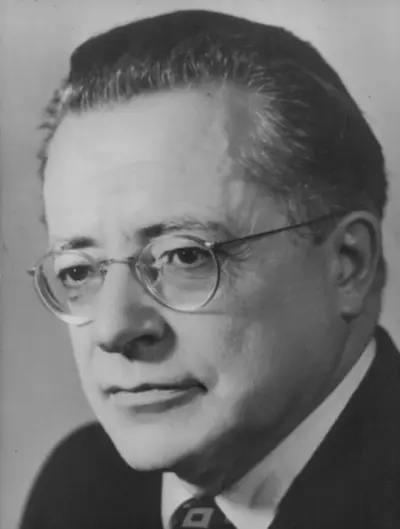
Palmiro Michele Nicola Togliatti was an Italian politician and leader of the Italian Communist Party from 1927 until his death. He was nicknamed Il Migliore ("The Best") by his supporters. In 1930 he became a citizen of the Soviet Union and later he had a city in that country named after him: Tolyatti.
