Andrei Platonov Quotes
If kids can forget their own mothers but still have a sense of comrade Lenin, then Soviet power really is here to stay!
Platonov, Andrei. The Foundation Pit. Translated by Robert Chandler, Elizabeth Chandler, and Olga Meerson, New York Review Books, 2009, p. 57.


Only 6 years after the Russian Revolution Lenin was already being perceived as an international provocateur and instigator of problems.

After the 1917 Russian Revolution many of the Western Countries sent troops to Russia where they aided the Whites against the Reds. When the Red Bolsheviks prevailed, there were many attempts to diplomatically and economically undermine the Communist government. This caused a unity among different Russian factions. Sforza urged leaving them alone and letting the Bolsheviks fail by their own ideology. Most Western nations and the United States did not agree with him.

In 1921 an Paul E. De Mott, an American Quaker famine relief worker in Germany was arrested as a "Bolshevik" and murdered without trial. American correspondents heard about the crime and asked for a statement from the chief American diplomat in Germany.

Commenting on political parties in Cuba:


Under Soviet Occupation many Christian clerics opposed the Communist view of the world and religion. Many others followed the party line. Few did so as enthusiastically and creatively as the Romanian Eastern Orthodox Patriarch.


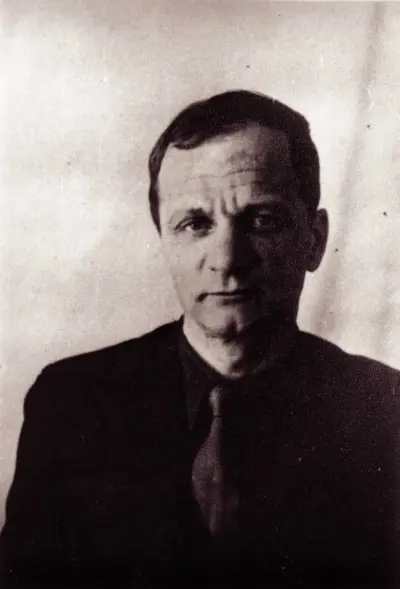
Andrei Platonov was the pen name of Andrei Platonovich Klimentov (Russian: Андре́й Плато́нович Климе́нтов), a Soviet Russian writer, philosopher, playwright, and poet, whose works anticipate existentialism. Although Platonov regarded himself as a communist, his principal works remained unpublished in his lifetime because of their skeptical attitude toward collectivization of agriculture (1929-1940) and other Stalinist policies, as well as for their experimental, avant-garde form. His famous works include the novels Chevengur (1928) and The Foundation Pit (1930).
