Whittaker Chambers Quotes
The chief fruit of the First World War was the Russian Revolution and the rise of Communism as a national power.
Chambers, Whittaker. Witness. Random House, 1952, p. 8.


In 1921 an Paul E. De Mott, an American Quaker famine relief worker in Germany was arrested as a "Bolshevik" and murdered without trial. American correspondents heard about the crime and asked for a statement from the chief American diplomat in Germany.

Only 6 years after the Russian Revolution Lenin was already being perceived as an international provocateur and instigator of problems.


Commenting on political parties in Cuba:


Advocating a revolution against the Karenski provisional government: Vladimir Lenin

After the 1917 Russian Revolution many of the Western Countries sent troops to Russia where they aided the Whites against the Reds. When the Red Bolsheviks prevailed, there were many attempts to diplomatically and economically undermine the Communist government. This caused a unity among different Russian factions. Sforza urged leaving them alone and letting the Bolsheviks fail by their own ideology. Most Western nations and the United States did not agree with him.


Many foreign armies, including troops of the United States, had surrounded Russia. Most had no specific instructions or purpose but they all wanted to protect their interests from the chaotic Russian situation as well as from each other who might use the Russian weakness to establish their foothold.


Lenin, Uritsky, and other Bolshevik leaders were attacked in 1918. Lenin was wounded but Utrtsky died, and this triggered the attacks on the other Russian factions by the Bolsheviks known as the “Red Terror.”


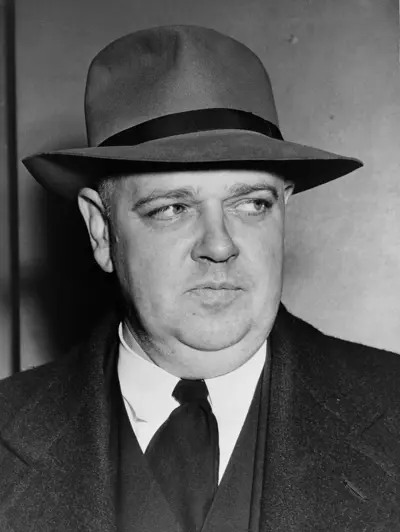
Whittaker Chambers was an American writer-editor, who, after early years as a Communist Party member (1925) and Soviet spy (1932–1938), defected from the Soviet underground (1938), worked for Time magazine (1939–1948), and then testified about the Ware group in what became the Hiss case for perjury (1949–1950), often referred to as the trial of the century, all described in his 1952 memoir Witness. Afterwards, he worked as a senior editor at National Review (1957–1959). US President Ronald Reagan awarded him the Presidential Medal of Freedom posthumously in 1984.
