Hirohito Quotes
We must not be forced to agree to merciless peace terms.
The Japanese had gotten into World War II by insisting that they had the right and necessity to expand their empire by invading Korea, Manchuria, and parts of China. To them, it was “merciless”, for the United States and other nations to insist that they stay on their own Islands. At the time Japan had a growing population and a small, fixed amount of land. The Japanese mainland had minimal natural resources. The Japanese distrusted the notion of international trade to provide them with their necessities, so the expansionist policies were perceived to be necessary for survival. The great irony was that after Japan had all these “merciless” peace terms imposed on them, they were forced into international trade, where they did extremely well and gained more affluence and world influence than they had ever dreamed of under the militarism of Hirohito’s administration.
Hirohito, 1901-1990, Emperor of Japan, 1944
Sourced by: Eigen's Political and Historical Quotations

Ironically, the Japanese Government and military were so polarized that it took several days for the authorities to get together and agree on a course of surrender action. The second atomic bomb dropped on Nagasaki speeded things up.

Prior to this the Japanese had not even considered what terms they might fight for if there were to be a peace negotiation. What the Japanese leadership apparently totally missed was the fact that President Roosevelt and all other American leaders throughout the war had promised that only unconditional surrender would be acceptable. This was reiterated in a Joint Declaration of the U. S. , China, and Great Britain. The Japanese thought this just propaganda and never took it seriously.


Truman had been briefed on the number of Japanese who committed suicide rather than surrender—including civilians—in Saipan, Okinawa, Iwo Jima, and other locations where United States troops had invaded. He and his experts agreed that the Japanese would not surrender unless there was a new dramatic factor that was outside the usual thinking—the atomic bomb. He was proved right about the warning. Not only did the Japanese ignore it, but they did not even surrender after the nuclear devastation at Hiroshima. It took a second bomb dropped on Nagasaki to motivate the surrender. So even a demonstration with all those Japanese casualties did not cause the surrender until it was repeated.


After the Hiroshima bomb there was still no surrender by the Japanese. The decision was made to drop the second bomb on Nagasaki.


His appeal was also in the name of concurring heads of state of Finland, Holland, Denmark, Norway, Luxemburg, and Sweden.

Bethe and other European refugees joined American and British scientists at Los Alamos, NM, for the development of the atomic bomb.
Actually, although the Emperor wanted to surrender, there was a military coup attempted to prevent his announcement being made to the Japanese people. Fortunately, it did not succeed, but he certainly had the alternative of fighting to the death. There were Japanese hard liners who believed that they could make the invasion of mainland Japan so costly in lives to the Allies that they could negotiate terms. The Atomic Bomb however, in the mind of the Emperor and other Japanese leaders rendered that strategy moot.

The note was found in an abandoned Japanese camp on Bataan. There are some who believe that this note was a forgery. However, most think it genuine as it reflected one of the Japanese
“aces in the hole” to defend against an allied invasion of the Japanese mainland. It was one of the reasons that some American planners advocated use of the Atomic Bomb. Of course that was a real risk of using the bomb. The Japanese might be so angry and feel morally abused and kill the many allied prisoners they had. Many thought it was a lesser risk because it did not have the symbolic animus that foreigners occupying the Japanese homeland had. The quotation illustrates the amazing complexity that the American and allied leadership faced trying to end WWII in the Pacific.

Vladimir Lenin

Lee was trying to negotiate a peace treaty as a part of his his potential surrender. However, Grant would not be drawn into that, Lee was NOT the government of the Confederacy, and Grant had served with him earlier in the Mexican War and knew he was not a fanatic on teh subject of slavery and race as most of the Southern leaders were. They werenthe ones who would have to be captured or driven to surrender. Grant could have gotten authoirioty as he was in almost real time contact with President Lincoln by telegraph. However, neither wanted to negotiate peace with Lee. Instead, Grant gave Lee and his men incredibly gracious termsof surrender which he and Lincoln hoped would casue the avarage Southern soldiers to feel better about surrender for although Lee's was the largest Confederate Army, there were still others out there that had to be dealt with,


She had gone to Europe where the 2nd World War was raging.
This was one of several petitions that were sent to the President by groups of scientists who were working on the development of the atomic bomb. The major objective of the scientists was to demonstrate the power of the bomb before it was used. The President did not select this policy of demonstration as the invasion of the Japanese mainland was imminent and America only had two bombs—one a uranium and the other, plutonium. If the demonstration would not produce the unconditional surrender, then there would only be one weapon left and it would take months to produce another. This was the strongest argument against using up a bomb. It was somewhat borne out when the Japanese did not surrender after the first bomb had been dropped on Hiroshima. It took the second.

After the war Donitz was found guilty of Unrestricted Submarine Warfare and using thousands of slave laborers in his shipyards. He was sentenced to 10 years, one of the lightest sentences if the German War Crimes Trials.

In early WWII, he opposed the Japanese military practice of killing conquered civilian people to instill fear and make them accept occupation. He was arrested by the military and sentenced to death, but he never was executed. Though not generally known, there were a number of Japanese who opposed the Japanese military policies and practices. He was one.
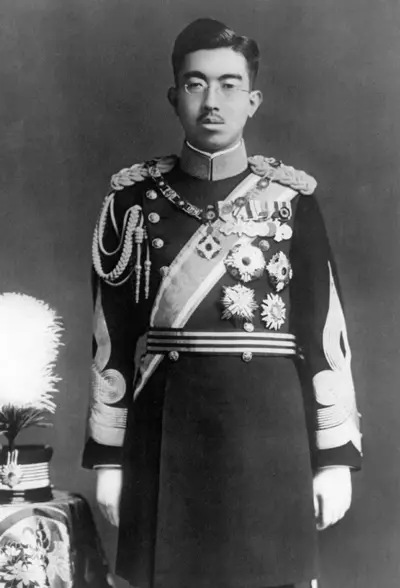
Emperor Shōwa, better known in English by his personal name Hirohito (裕仁), was the 124th emperor of Japan according to the traditional order of succession, ruling over the Empire of Japan from 25 December 1926 until 2 May 1947, after which he was Emperor of the state of Japan until his death. He was succeeded by his fifth child and eldest son, Akihito. Hirohito and his wife, Empress Kōjun, had seven children, two sons and five daughters. By 1979, Hirohito was the only monarch in the world with the title "emperor." Hirohito was the longest-lived and longest-reigning historical Japanese emperor and one of the longest-reigning monarchs in the world.
