Amartya Sen Quotes
we must go on fighting for basic education for all, but also emphasize the importance of the content of education. We have to make sure that sectarian schooling does not convert education into a prison, rather than being a passport to the wide world.
Sen, Amartya. "Amartya Sen Extended Interview." Wide Angle, PBS, 2 Sept. 2003.


There were many opponents to compulsory education especially in the South and rural areas.


With the exception of a few theocracies, the power to set standards of education is claimed by virtually every government in the world. Some national governments have traditionally delegated some or much of the power to state, regional or local governments. The United States has been one of the rare exceptions. The words “education” or “schools” never even appear once in the U. S. Constitution. Therefore, in the U. S. the power belongs with the state governments. (Recently with “No Child Left Behind” the U. S. Federal government has been involved in educational standards setting.) This quotation is used by many as a classic example of a practice of many right wing fundamentalist Christians and Jews who extrapolate from the Bible to determine which legislation God wants or opposes. Most Christian and Jewish clerics and theologians however reject this notion and have a more modern view of the role of God in the democratic political process. Both the United States and Canada have very small minorities who hold the Stockwell Day position. On difference however is that in the United States, such extreme fundamentalists rarely enter or succeed in politics.


It did not pass. Smalls had a hand in re-writing the Constitution of the State into which he had been born into slavery.


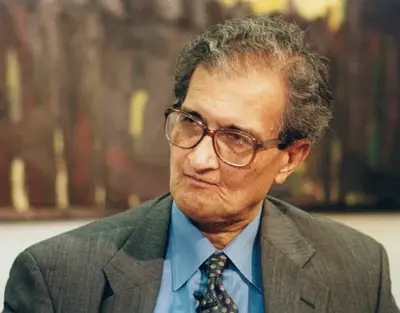
Amartya Kumar Sen CH is an Indian economist and philosopher, who since 1972 has taught and worked in the United Kingdom and the United States. Sen has made contributions to welfare economics, social choice theory, economic and social justice, economic theories of famines, decision theory, development economics, public health, and measures of well-being of countries.
