James Russell Lowell Quotes
It was in making education not only common to all, but in some sense compulsory on all, that the destiny of the free republics of America was practically settled.
There were many opponents to compulsory education especially in the South and rural areas.
James Russell Lowell, 1819-1891, U. S. Ambassador to Spain & England, “New England Two Centuries Ago”, My Study Windows, 1871
Sourced by: Eigen's Political and Historical Quotations


The phrase “national care and expense” was one that was seen as precedent for those advocating federal aid to education and a strong Department of Education. However, the majority of Adams contemporaries saw education, even public education, as a local matter. The word “education” or “school” never appeared in the Constitution. Adams was well before his time on this point.


It did not pass. Smalls had a hand in re-writing the Constitution of the State into which he had been born into slavery.

The organization was initially called the National Negro Committee. The following year the name was changed to the National Association for the Advancement of Colored People. Note that at the time, even for Blacks, the concept of desegregation was so far from reality that their efforts were simply to have segregated schools with the same resources as the white children had. The “separate but equal” doctrine was the method of the segregationists.

This appears to be the first statewide free public education system available to the poor.


There are still some extreme conservatives who hold this view. To them and Mises, public education should not be allowed, much less required.
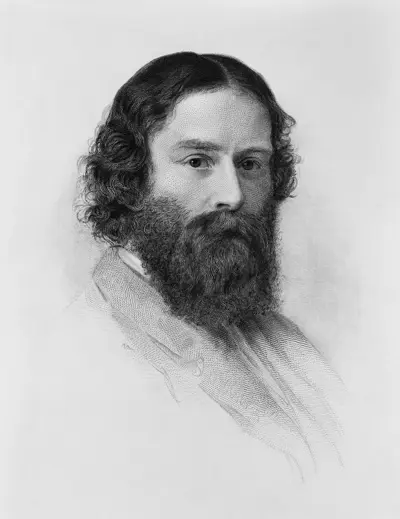
James Russell Lowell was an American Romantic poet, critic, editor, and diplomat. He is associated with the Fireside Poets, a group of New England writers who were among the first American poets that rivaled the popularity of British poets. These writers usually used conventional forms and meters in their poetry, making them suitable for families entertaining at their fireside.
