Cass Sunstein Quotes
We live in a period in which political disagreements are routinely handed over to the courts. Whenever you think that the president is wrong, you might well cry out that he has violated the Constitution - and ask federal judges to rule accordingly.
Sunstein, Cass R. "Why We Cry 'Unconstitutional'." Bloomberg, Bloomberg L.P., 12 Feb. 2016.

President George W. Bush had ignored a federal law and tapped the phones of Americans without probable cause and a warrant issued by a court. The President’s defenders argued that the President, as Commander in Chief, has the Constitutional responsibility to lead the military and protect the nation. Intelligence gathering is part of military activity. Therefore the intelligence gathering is a Constitutional duty and the Congress, under the separation of powers doctrine, may not interfere with the President’s Constitutional Duty to conduct intelligence. Under this doctrine, the President need not obey laws that he believes impinge on his management of the war effort and the defense of the nation. Most legal scholars believe that this argument is nonsense, but the George W. Bush administration has stated the doctrine and it was the subject of much litigation.

Marshall is famous for, as Chief Justice, establishing the principle that the Judiciary can override Congress and the Executive in determining Constitutionality. However, as this quotation illustrates this principle had been discussed in open debate on the ratification of the Constitution. It was not simply a grab for power by a Chief justice; he uttered this quotation long before he ever suspected he would be a judge but actually spent much of his career in the executive and legislative branch of government.


The view that the Supreme Court was the final arbiter of constitutional controversies was not held in early America.

Marshall did not crate this concept or some its phraseology out of whole cloth. See Rufus King {610245} for a Constitutional Convention basis for the statement.

See John Marshall's later (1803) use of the concept and term "repugnant." {606483}

Jefferson’s fears were later reinforced by John Marshall in Marbury v. Madison {606468}

The Congress over the last century has ceded much of its Constitutional power to the President. Congress has much power to check the President, but just as Congress has not been very competent at legislating, oversight, and conducting hearings and investigations, it has not organized itself to use the powers it has very well.


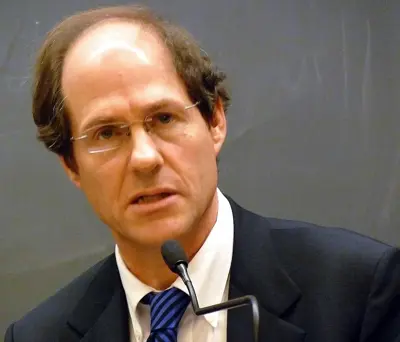
Cass Robert Sunstein is an American legal scholar, particularly in the fields of constitutional law, administrative law, environmental law, and law and behavioral economics. He is also The New York Times best-selling author of The World According to Star Wars (2016) and Nudge (2008). He was the Administrator of the White House Office of Information and Regulatory Affairs in the Obama administration from 2009 to 2012.
