Edmund Burke Quotes
We cannot, if we would, delude ourselves about the true state of this dreadful contest. It is a religious war.
Burke did not mean that it was a war between Protestants and Catholics. In his time religious war was considered the most terrible of wars because there were virtually non-negotiable principles involved and the passions were so great. The emotional fervor of the French after the French Revolution was extreme in that they were bringing freedom to Europe.
Edmund Burke, 1729-1797, Irish Orator & Member of the British Parliament, Referring to the war that had broken out in between England and France, 1793, Quoted by Adam Zamoyski in “Holy Madness: Romantics, Patriots, and Revolutionaries, 1776-1781”
Sourced by: Eigen's Political and Historical Quotations


The Bull was directed at French King Louis VII. On Christmas Eve the year before Zengi had broken into the city of Edessa and massacred the French inhabitants. This was the Proclamation of the start of the 2nd Crusade. Note that the Pope, in order to raise troops and money for the Crusades, used the remission of previous sins to motivate Pietro dei Paganelli di Montemagno

See {586041} for a Koranic quotation that urges world domination by Islam. In this quotation, The Prophet was talking to his followers at a time when Islam was not even a dominant religion in Arabia. And war was the way in which tribes, groups, and religions and sects, established themselves and grew. Although there are other Koranic passages which tell the faithful that people can only legitimately come to Islam through individual commitment and willingly, this passage not only seems to contradict that but also reflects a desire to punish and disgrace “non-believing” groups. This vengeance motif is also contradictory to much else of the Koran which generally preaches love, forgiveness, and understanding. However, there are contradictions and intellectual inconsistencies within the Koran just as there are within the Old and New Testaments.


of the Central Intelligence Agency fomented Iranian Revolution. At the request of the British MI6 intelligence service, the CIA implemented a “spontaneous” coup d’etat to overthrow the popularly elected Iranian President Mohammad Mosaddegh. One of the reasons this is a very important quotation is that it shows an interesting aspect if jihad—Islamic Holy War. One of the many tactics the CIA used was to bribe key Islamic Imams and other religious officials to declare a jihad against Mosaddegh—to tell the people that it was their Islamic duty to get rid of Mosaddegh who was a threat to Islam and the word of God. The quote illustrates that most of the Western powers who wanted to achieve a political objective would play this jihad religious card—one that was much easier to start than to control. When Eisenhower urged using the jihad tactic, he did not imagine that jihad would be used against the United States for the 9-11 attack and the Iraq and Iran wars. See {637008} and {637007}.


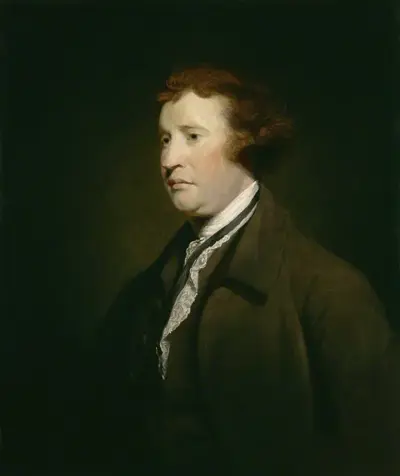
Edmund Burke was an Irish statesman, economist, and philosopher. Born in Dublin, Burke served as a member of parliament (MP) between 1766 and 1794 in the House of Commons of Great Britain with the Whig Party after moving to London in 1750.
