Elie Wiesel Quotes
Holy War is a contradiction of terms.
Wiesel, Elie. Elie Wiesel: Conversations. Edited by Robert Franciosi, University Press of Mississippi, 2002.


In the early stages of Islam, Muhammad had hoped to convert the Jews and others on the Arabian Peninsula. When they refused to be converted, he warred against them usually killing the men, and taking the women and children as slaves. The result was that non-believing tribes were “cleansed” from the Arabian Peninsula. The Muslims at the time preferred children as slaves. For then they could convert the children against their will. Adults in Islam must accept Islam in order to convert. Children are regarded as having no such maturity of decision making and therefore opposition to conversion may be ignored and they may be forced. Critics of Islam and those who argue that Islam is at odds with all other religions point to this quotation. They claim that it is the only religion whose founder and fundamental scriptures demand war against others for no other reason than that they believe in a different religion. The Catholic Church during the Crusades and the Inquisition had a similar philosophy as did Christian missionaries colonizing Africa later. One difference is that most Christians today repudiate the doctrine as against the true spirit and teachings of Christ and view it as historical error, while very few modern Muslims repudiate this quotation of the Prophet.

of the Central Intelligence Agency fomented Iranian Revolution. At the request of the British MI6 intelligence service, the CIA implemented a “spontaneous” coup d’etat to overthrow the popularly elected Iranian President Mohammad Mosaddegh. One of the reasons this is a very important quotation is that it shows an interesting aspect if jihad—Islamic Holy War. One of the many tactics the CIA used was to bribe key Islamic Imams and other religious officials to declare a jihad against Mosaddegh—to tell the people that it was their Islamic duty to get rid of Mosaddegh who was a threat to Islam and the word of God. The quote illustrates that most of the Western powers who wanted to achieve a political objective would play this jihad religious card—one that was much easier to start than to control. When Eisenhower urged using the jihad tactic, he did not imagine that jihad would be used against the United States for the 9-11 attack and the Iraq and Iran wars. See {637008} and {637007}.


The Papacy was at one of it’s lowest points. Two men, Clement and Urban, both claimed the Papacy and each had raised an army to fight the other. Each was promising indulgences to those who would fight, and in a modality similar to the Muslim terrorists of the 21st century, the soldiers were promised ascendancy to Heaven if they fell in battle for such a holy cause. The armies of the popes marched under the cross as their banner, and Wycliffe found that obscene and actually wrote a treatise saying so. See {618087}.

The source was in the form of an autobiography but was written later by someone unknown. Prior to WWII and the German killing of over 25 million people, Tamerlane was responsible for more killings than any other ruler in the world. 17 million is generally given as the number if one analyses the Persian, Indian and other literature. He controlled the Middle East, the Ottoman States, a part of Russia and Eastern Europe, Persia and much of China and India. Although he himself was a Muslim he warred against other Muslim states and warlords defeating them all. Muslim nations are historically very ambivalent about Tamerlane. Pride as a conqueror is eclipsed by this excessive rapine and murder. In one case, the Persian city of Isfahan, he actually built a giant pyramid of 70,000 decapitated heads of prisoners. Also, the fact that he attacked and defeated major Muslim empires violates a current Muslim notion that there is a unity of Islam. He attacked, conquered and butchered the Ottomans, Syria, Iraq, Persia and the Muslim (Mugal) states of India.


To modern readers this quotation is surprising in that Bryan is historically viewed as an extreme religious zealot. However, this was his mid-career and the extreme religious identification came later when he was out of office and made his living speaking to religious groups.

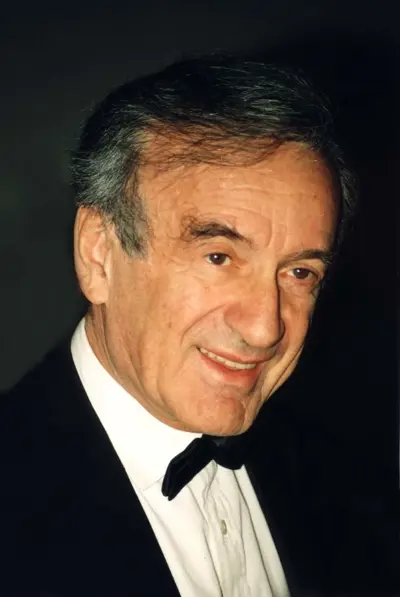
Elie Wiesel was a Romanian-born American writer, professor, political activist, Nobel laureate, and Holocaust survivor. He authored 57 books, written mostly in French and English, including Night, a work based on his experiences as a Jewish prisoner in the Auschwitz and Buchenwald concentration camps.
