Conrad Black Quotes
Watergate enabled the Democrats to cut off all aid to South Vietnam and ensure American defeat in a war their party entered and had effectively lost, before Nixon salvaged a non-Communist South Vietnam while effecting a complete American withdrawal.
Black, Conrad. Richard M. Nixon: A Life in Full. PublicAffairs, 2007.


Chomsky was not asserting this statement as the truth. He was making the statement assuming that the absurdity of it would be clear to the listener and they would also realize that was what the then government policy was. North Vietnamese had infiltrated the South and had much support in many of the South Vietnamese villages. When the U. S. bombed the North Vietnamese—and the Vietnamese inhabitants—of those villages, the intention was indeed to help the South Vietnamese. If Chomsky were a politician running for office, his opponent might well have taken this quote and used it to “prove” that Chomsky supported the American effort in the Vietnam War when he was a vehement opponent.

Most Americans had not then realized that American troops had gotten involved in the Vietnamese Civil War. For some this was shocking. Kennedy helped his brother, President Kennedy, arrange for a coup to replace President Ngo Dinh Diem in which the man we pledged to “stand by” was murdered. He turned out to be thoroughly corrupt, and had little if any more respect for democracy and human rights than the North Vietnamese leadership did. Nonetheless we broke a pledge to an ally. This and similar promises that are not kept complicates American diplomacy as there is rarely complete trust in the pledges of American officials.


Before the 1968 election, President Johnson, and gotten the North Vietnam Communists to agree to Peace Talks with the U. S. and South Vietnam. Then Candidate Nixon thought that if the peace talks were ongoing and making progress, there would be more support for the Democrats and Nixon's opponent Hubert Humphrey. So Nixon secretly send a secret emissary to South Vietnamese President Nguyen Van Thieu telling him that he would not get a very good deal because President Nixon claimed that President Johnson was too eager to end the Vietnam war. He suggested that if Thieu boycotted the peace talks, then when Nixon was elected, he would guarantee a much better deal for South Vietnam and Thieu personally. President Thieu boycotted the peace talks and there could be no progress. However there is a Federal Law, the Logan Act, that makes it a felony for a private American citizen to conduct or interfere with foreign policy or negotiations with a foreign government. President Johnson found out about Nixon's sabotage of the Peace Talks, called Nixon (see {583263}) and threatened him with prosecution if he interfered further. LBJ had decided that with the left wing at odds with the U. S. Government over the Vietnam war, a prosecution of Nixon would cause the Right Wing to challenge the government also and the country didn't need further polarization. He would do that only if Nixon did not heed the President's warning. But when Nixon won the election and became President, he was terribly anxious that his pre-election crimes would be made public, and spent much of his time and staff effort trying to find out who knew about his politically self-serving felony and who might make his crime public.


The occasion was the visit to Washington of French Minister M. Jean Letourneau. The French were fighting the communists in Vietnam and the U. S., not yet in the fight, promised material and political aid, but no military participation. It was almost a decade later that America sent its first military personnel to Vietnam. The West was persuaded that the French could handle the situation. When they were defeated, America and Britain assumed that it was the notorious military incompetence of the French that accounted for the situation rather than the competence and commitment of the Vietnamese Communists and their support of the majority of the people.


Kerry was a decorated Vietnam War hero who opposed the war in its later years.

After the French were driven out, Vietnam was supposed to have a national election to choose a government but the people of Vietnam were deeply split between those supporting the Communists and Ho Chi Min (who had led the campaign to oust the French from their colony) on one side and Vietnamese who were more Westernized and favored a democracy. Vietnam was mostly Buddhist but most of the Western oriented leadership of the Democracy advocates were Christians. They wanted to delay the election to give them a chance to organize to catch up with the communists at political organization. Ho Chi Min and the Communists already do facto controlled the North of Vietnam and decided to use force against the Western oriented forces whose military was much smaller than the Communists who had ejected the French. The United States provided financial aid and supplied weapons and Central Intelligence Agency assistance to the South Vietnam forces who were afraid of being overrun by the Communists headquartered in the North. Taylor’s mission was to go to Vietnam, assess the situation and make recommendations to President Kennedy.
sending American troops to Vietnam
Had he signed such a treaty in 1968, he would have been pilloried by the Conservatives of both parties for selling out the interests and principles of the United States and shackling the military before they could win the war. The military was lying about their successes and there were very few. Further, our ally whose government we were protecting from armed revolution was totally corrupt and did not support freedom and democratic values much more than the North Vietnamese Communists did. The Vietnamese in the South had little to fight for unless they were proofing from the corrupt government. There was no possibility that American could have won the war under those conditions. When the Nixon Administration signed the treaty, some of the ultra conservatives objected, but Nixon was a Republican anti-Communist and red baiter and this blunted the opposition of the bulk of the conservatives who were seeing a more realistic view of the war. The liberals who hated Nixon, however, supported him on this matter which was then their most important issue.
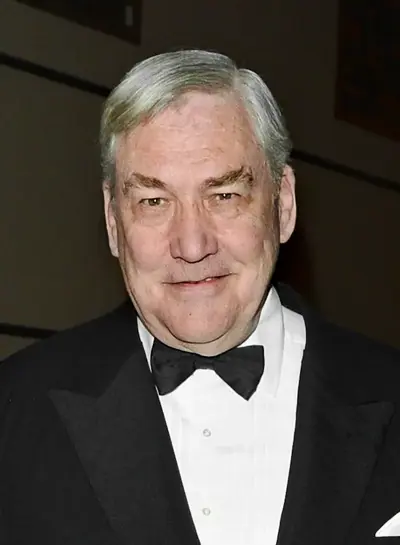
Conrad Moffat Black, Baron Black of Crossharbour, KCSG, is a Canadian-born British former newspaper publisher, convicted criminal, and writer. His father was businessman George Montegu Black II, who had significant holdings in Canadian manufacturing, retail and media businesses through part-ownership of the holding company Ravelston Corporation. In 1978, two years after their father's death, Conrad and his older brother Montegu took majority control of Ravelston. Over the next seven years, Conrad Black sold off most of their non-media holdings in order to focus on newspaper publishing. Black controlled Hollinger International, once the world's third-largest English-language newspaper empire, which published The Daily Telegraph (UK), Chicago Sun-Times (U.S.), The Jerusalem Post (Israel), National Post (Canada), and hundreds of community newspapers in North America, before controversy erupted over the sale of some of the company's assets.
