Ambrose Bierce Quotes
WASHINGTONIAN, n. A Potomac tribesman who exchanged the privilege of governing himself for the advantage of good government. In justice to him it should be said that he did not want to.
Bierce, Ambrose. The Devil's Dictionary. The Neale Publishing Company, 1911.


The government relationship to people phrase, although probably Lincoln's most famous, was not totally original. John Adams came close in a 1774 proclamation. As did John Marshall in his McCulloch v. Maryland decision. Daniel Webster's Speech on Foot's Resolution was very close. as was Theodore Parker in 1850 {629578}. There was also Thomas Cooper in 1795. But the earliest appears to be John Wycliffe in 1382 {567292}. It is not known with which of these Lincoln was familiar.


For that, the Church burned him at the stake. Note the phraseology and compare it to Gettysburg Address {458852}. It is not known whether Lincoln was aware of this quotation or others that used similar wording.

Actually the Iroquois had a very sophisticated system of regular laws and government some of which was incorporated into our Constitution. However, the Iroquois sided with the British in the American Revolution and at its conclusion, most were driven out of their New York lands and became refugees in British Canada. So by 1816, the Iroquois, the most sophisticated, powerful and affluent of all the American Indian tribes were no longer consequential in America.

The speech was never actually delivered, but instead the Bishop published it. It received wide distribution including in America where it was published by the Maryland Gazette on September 29, 1774.


Harding was arguing for party government. He may or may not have been right, but he was one of the weaker administers that held the American presidency. In addition he was not a particularly hard worker, and was more than willing to share any burdens.


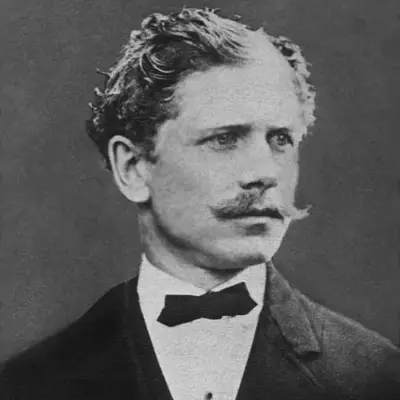
Ambrose Gwinnett Bierce was an American short story writer, journalist, poet, and Civil War veteran. His book The Devil's Dictionary was named as one of "The 100 Greatest Masterpieces of American Literature" by the American Revolution Bicentennial Administration. His story "An Occurrence at Owl Creek Bridge" has been described as "one of the most famous and frequently anthologized stories in American literature"; and his book Tales of Soldiers and Civilians (also published as In the Midst of Life) was named by the Grolier Club as one of the 100 most influential American books printed before 1900.
