Robert G. Ingersoll Quotes
Voltaire made up his mind to destroy the superstition of his time. He fought with every weapon that genius could devise or use. He was the greatest of all caricaturists, and he used this wonderful gift without mercy.
Ingersoll, Robert G. "Voltaire." The Works of Robert G. Ingersoll, Volume 3, Dresden Publishing Co., 1900, p. 195.


One of the reasons that this quotation is so significant is that the Roman Catholic Church had been historically antithetical to science and scientists. It took hundreds of years before the church would admit that Galileo was right and the church wrong about the earth revolving around the sun. But Pope John Paul II, along with his other major accomplishments removed the traditional Catholic hostility in theology and tradition. He even acknowledged the validity of the Theory of Evolution and taught that there was nothing inherent in evolution that denied God or scripture.


Much of modern science involves non-intuitive concepts that can rarely if ever be discovered using common sense. It was hard enough for most people to accept the notion of an infinite number, but now we know that there are many infinite numbers and they are all different form one another. Darwinian thinking was contrary to most learned thought of the day, and even much public opinion today. Even Albert Einstein had to struggle to comprehend the findings of Quantum Mechanics which are very non intuitive—one object can be in two different places at the same time. Meanwhile, most people are totally unaware that the world around is does not correspond to normal human intuition and common sense. Yet these are the same and only tools that we continue to use in making decisions about our society. And the fundamental truths of yesterday, the foundation of past thinking and glory, are the naïve simplifications and errors of today and become the superstitions of tomorrow.
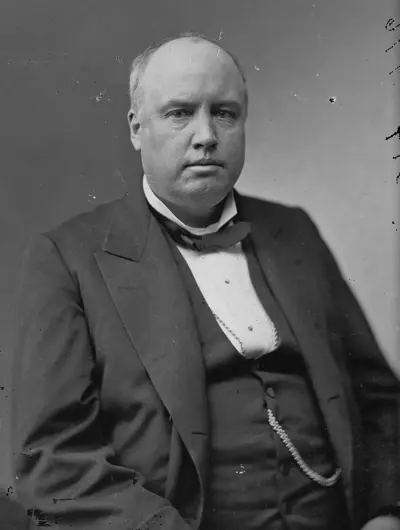
Robert Green "Bob" Ingersoll was an American lawyer, a Civil War veteran, political leader, and orator of the United States during the Golden Age of Free Thought, noted for his broad range of culture and his defense of agnosticism. He was nicknamed "The Great Agnostic". Ingersoll was considered to be the greatest orator and political thinker of his day, but his overt atheistic views curtailed his elected political career.
