Umberto Eco Quotes
The Enlightenment, the Age of Reason, is seen as the beginning of modern depravity.
Eco, Umberto. The Prague Cemetery. Translated by Richard Dixon, Houghton Mifflin Harcourt, 2011.


One of Ferguson’s theses is that historical change often happens very rapidly.


Much of modern science involves non-intuitive concepts that can rarely if ever be discovered using common sense. It was hard enough for most people to accept the notion of an infinite number, but now we know that there are many infinite numbers and they are all different form one another. Darwinian thinking was contrary to most learned thought of the day, and even much public opinion today. Even Albert Einstein had to struggle to comprehend the findings of Quantum Mechanics which are very non intuitive—one object can be in two different places at the same time. Meanwhile, most people are totally unaware that the world around is does not correspond to normal human intuition and common sense. Yet these are the same and only tools that we continue to use in making decisions about our society. And the fundamental truths of yesterday, the foundation of past thinking and glory, are the naïve simplifications and errors of today and become the superstitions of tomorrow.


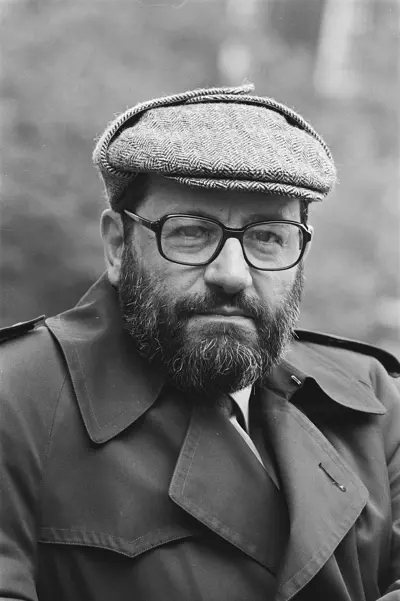
Umberto Eco OMRI was an Italian medievalist, philosopher, semiotician, cultural critic, political and social commentator, and novelist. In English, he is best known for his popular 1980 novel The Name of the Rose, a historical mystery combining semiotics in fiction with biblical analysis, medieval studies, and literary theory, and Foucault's Pendulum, his 1988 novel which touches on similar themes.
