Howell Cobb Quotes
Use all the Negroes you can get for ... cooking, digging, chopping and such. But don't arm them. If slaves will make good soldiers, our whole theory of slavery is wrong.
Contrast this view with that of Union General Ulysses S. Grant.
Howell Cobb, Confederate General, Advice to Jefferson Davis
Sourced by: Eigen's Political and Historical Quotations


In the 1930s African Americans who traveled were subject to countless humiliations whenever the sought hotels, rooming houses, restaurants and other accommodations. Gas stations would not allow them to use bathrooms and they were reduced to using open fields. Traveling and vacationing was, for Blacks, humiliating. Wikipedia: “Green reviewed hotels and restaurants that did business with African Americans during the time of Jim Crow laws and racial segregation in the United States. He printed 15,000 copies each year. In the 1930s, Green began his work by compiling data on stores in the New York area that accepted black travelers, and published his first guide in 1936. Similar guides had been published for Jewish travelers, who sometimes faced discrimination. Green's guide was so popular that he immediately began to expand its coverage the next year to other US destinations, adding hotel and restaurants as well.”

The first sentence is inscribed on the Jefferson Memorial in Washington DC. The last two sentences are rarely quoted.


Newsletter of the United Sons of Confederate Veterans


The issue of slavery which had been suppressed in Congress for the first decades of the nation broke out when Missouri statehood was considered. By previous agreement, slavery was not even discussed in Congress but the time period elapsed. Tallmadge not only proposed that no more slaves could come into Missouri {613176} but most shocking to the Southerners was that every person born in the new state would be free at the age of 25. In a generation, there would be no more slavery in Missouri and there would be no economic compensation for slave owners at all. The House of Representatives accepted the amendment, but it failed in the Senate. At that time, Senators were not elected by voters but were appointed by the state legislators and the Southern slave states had a disproportionate share of the senate from a population point of view. But what this quotation shows clearly that a majority of the country in 1819 were opposed to slavery and were willing to end it without compensation.


This quotation is significant. Ibn Khalodun was one of the great intellectual Arab scholars, yet he looked upon Blacks as subhuman and fit for slavery. While Islam preaches the equality of all people, the Arabs had and many still have a raciest view of Blacks. The Arabs were the leaders among the slave traders and many an American Captain of a slave trader bought his slaves from Arab slave traders. Saudi Arabia was the last nation to outlaw legal slavery (1963) and it is still illegally practiced in Saudi Arabia and other Arab states of the Middle East. The attitude can be seen in much of the Arab Middle East even today. For examples, the Muslim Arabs in Northern Sudan refer to the Black non-Islamic Southerners using a derogatory term that means slave.


The President often referred to this statement as an example of his wife’s acumen. She had been born to a Southern plantation and inherited the land and the slaves. Her view, and his, were typical of the Southern point of view in early America.

This quotation explains why so many of the Southern poor so actively supported the racist Slavery system even though they could not afford slaves and received no direct benefit from slavery or the discrimination against free Blacks. The poor were not at the bottom of the totem pole, and therefore had a dignity and social status, that the poor in a racially integrated society never possessed.

This law required the treatment of Blacks as whites were then treated with respect to indentured servitude—a limit of 10 years after which the person would be free. However, this law was poorly enforced. The “General Court” was the name for the legislature of the Rhode Island colony.


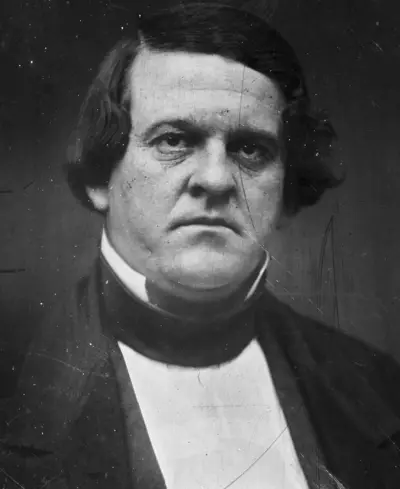
Howell Cobb was an American political figure. A southern Democrat, Cobb was a five-term member of the United States House of Representatives and Speaker of the House from 1849 to 1851. He also served as the 40th Governor of Georgia (1851–1853) and as a Secretary of the Treasury under President James Buchanan (1857–1860).
