Mahatma Gandhi Quotes
To change one's religion under the threat of force is no conversion but rather cowardice.
Gandhi, Mahatma. The Collected Works of Mahatma Gandhi, vol. 85, Publications Division, Ministry of Information and Broadcasting, Government of India, 1982, p. 251.


Jews were forced to convert to Catholicism under penalty of death. While the archbishop did not approve, he did not describe the murders in moral terms or used his great religious power to stop the practice.

Quintus Septimius Florens Tertullianus


This article was originally directed against non-Muslim religions who actively sought to convert Muslims. However, Islamic organizations, have also historically made their greatest inroads with the poor and ignorant members of a society. The madrassas of Pakistan, the activities of Hezbollah, in Lebanon, and Hamas in Gaza all have common characteristics with the Salvation Army where services are provided for the poor and often uneducated with the required participation in religious services, education and/or prayer. There are many Christian, Muslim, and other religious leaders who do not approve of such attempts at conversion, but there are forces within these same religions who not only take advantage of poverty and ignorance to convert but are almost exclusively devoted to that tactic. The Russian Orthodox Church had the same protest against Protestant sects targeting the poor after the fall of the Soviet Union. In general, most religions see nothing wrong with converting people in times of crisis, so long as they are doing the converting. But if another religion is converting their adherents, then it is a violation of human rights.

Henry of Navarre. The practice of kidnapping children from parents of the other faith and baptizing them was rampant.

This quotation is important because it emphasizes an aspect of freedom of religion that is not usually discussed—the freedom to LEAVE a religion. As an Islamic reformer born in Iran, this notion is extremely important. Under Sharia—Islamic Law—capital punishment is required for anyone who converts from Islam to any other religion. This has been made a part of the civil law of many Islamic nations from Afghanistan to Saudi Arabia as well as Iran where Sharia IS the civil law. There is no other religion in the world which makes conversion away from the religion a capital crime requiring execution. Executing people who leave a religion is a major violation of the Universal Declaration of Human Rights.


Damn this world, Damn this time. Damn this fate That uncivilized Arabs have come to make me a Moslem
This is a huge epic poem that he wrote over several years. At the time, the Persians considered themselves far more civilized and sophisticated than the Arabs who were but tribesmen. They really resented the fact that it was the Arabs that brought Islam. And before, most of the Persians worshipped Zoroaster. Although Islam spread faster and further than any religion in history, it was not always easily accepted as this stanza of the poem indicates. There is to this day a superiority that the Iranians perceive over the Arabs. And to this day, many Arabs resent the Iranians for this attitude.
The boycott had been triggered by a breakup of a mixed marriage where the Protestant wife took her two children to Belfast and would only reunite with her husband if he agreed to bring up the children as Protestants. This brought Catholic accusations of a Protestant conspiracy and plot to kidnap Catholic Children and take them to Northern Island to be brought up as Protestants. The boycott soon ended as it was too unfair for all but the most rabid Anti-protestants.

Constantine the Great. This is one of Constantine’s major defenses of his decision to adopt Christianity. Scholars today still argue as to what part practical politics played in Constantine’s conversion and what part was his personal religious conversion.


It was uttered in the King’s name by soldiers and officials throughout the land. It is not certain that the exact words of choice were created by Louis but they were uttered in his name. Protestants had been given the right to practice their religion in France by the King’s grandfather (the Edict of Nantes {617664}), but Louis XIV rescinded that {617765} and gave Protestants this choice. Some converted. Some were murdered. Some escaped to other countries.
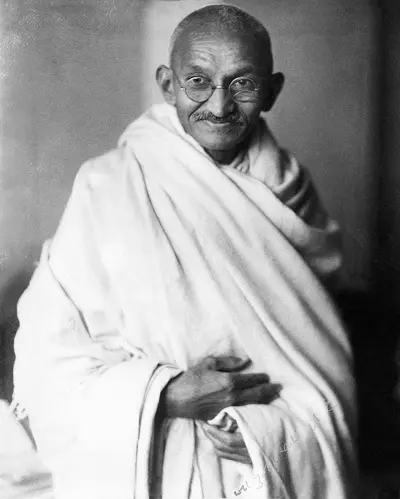
Mohandas Karamchand Gandhi was an Indian lawyer, anti-colonial nationalist, and political ethicist, who employed nonviolent resistance to lead the successful campaign for India's independence from British rule, and in turn inspired movements for civil rights and freedom across the world. The honorific Mahātmā (Sanskrit: "great-souled", "venerable"), first applied to him in 1914 in South Africa, is now used throughout the world.
