Isidore of Seville Quotes
King Sisebut forced the Jews by power when he should have roused them by the doctrine of the faith.
Jews were forced to convert to Catholicism under penalty of death. While the archbishop did not approve, he did not describe the murders in moral terms or used his great religious power to stop the practice.
Isidore of Seville, c. 560–636, Spanish Roman Catholic Saint, Archbishop of Seville, Advisor to Sisebut, Visigothic King of Hispania, Criticism of the King’s methods of conversion of the Jews in the kingdom, Quoted in David Levering Lewis, God’s Crucible, 2008
Sourced by: Eigen's Political and Historical Quotations


In this quotation the founder of Protestantism criticizes other Christians for their anti-Semitism. Luther later became a virulent anti-Semite himself. See {629230}


The origins of the extreme religious intolerance of Spain occurred centuries before the excesses of the Spanish Inquisition. Before the Conference the Visigoths and their king had been converted to Christianity but not all cared for the new religion.

These were the most terrible and restrictive laws against Jews who would be hunted down and forced to accept Christianity. The Visigothic laws were a combination of Visigothic tradition and the codification by Catholic Clerics. Many scholars have traced the terrible policies and practices against Jews by the Spanish throne and the Inquisition 500 years later to these earlier Spanish Visigoths and their formal legal structure. This is the most formalized and sophisticated compendium of laws of the so-called “barbaric peoples” of Europe. The compilation was in many ways a documentation of the traditional laws of the Visigoths that had evolved over hundreds of years.

See {586039} for a quotation that goes further and seeks to punish and humiliate the non believers. This sura is often used by those wishing to illustrate the intolerance of Islam—especially of other religions. They fail to put this into the context of the Old Testament which proscribed death for heretics or the history of Christianity regarding the murder of nonbelievers. The difference is however, that a very small proportion of Jews or Christians today believe in following Biblical instructions in this respect while the proportion of Muslims who believe in the literal interpretation of scripture on these points is much larger. However there are Islamic modernists and moderates throughout the world who reject this notion of warring on all other religions and there is a struggle going on within Islam itself.

Both Puritans and Quakers were persecuted and physically abused in England by the Anglican Church. The Puritans as soon as they became dominant in part of the American colonies began persecuting Quakers. The Quakers who were the majority in the Pennsylvania colony, however were tolerant of other religions. This history was another of the many reasons the Founding Fathers wanted no established church. A “scorpion” was a type of whip that was particularly painful.


In September of 2006 Pope Benedict XVI, quoted this statement in a lecture to theological students. There was much distress and protest among Muslim leaders.

Quintus Septimius Florens Tertullianus

Odo of Chatillon-Sur-Marne. This is an amazingly distressing quotation for most moderns. Here we have the Pope preaching genocide and ethnic cleansing. This was one of the main triggers of the bloody Crusades and is not forgotten by Muslims in the Middle East Today. As Islam has not changed a great deal in 1000 years, most Muslims assume that the same is true of Christianity and especially the popes and the Roman Catholic Church. This is one of the reasons that the Islamic world reacts so strongly when a pope makes any statement negatve about Muslims and Islam.


The modernity of this ancient leader is striking. For another example see his view on the importance of engendering supportive public opinion: XXX


Toleration is a relative term. The Muslim Moors made Christians (and Jews) pay a special tax. At times they were forced to wear special clothing so that they could be readily identified. And they could not build churches larger or taller than the smallest mosque in the community. At times, their occupations were restricted but at other times Christians and Jews were appointed to the highest positions like Vizier. The Inquisition, in contrast, forced all Muslims (and Jews) to leave the country without any of their property or money or be tortured and killed—usually by burning at the stake unless of course that they converted to Christianity.

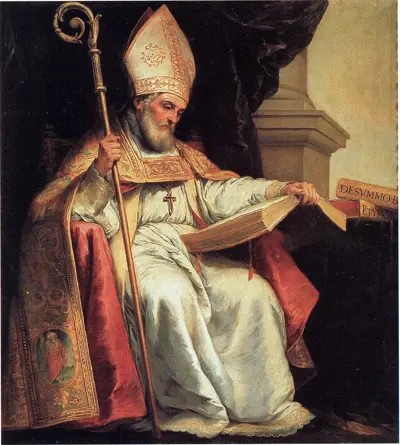
Isidore of Seville was a Spanish scholar and cleric. For over three decades, he was Archbishop of Seville. He is widely regarded, in the words of 19th-century historian Montalembert, as "the last scholar of the ancient world".
