Saint Augustine Quotes
It is indeed better … that men should be led to worship God by teaching, than that they should be driven to it by fear of punishment or pain; but it does not follow that because the former course produces the better men, therefore those who do not yield to it should be neglected. For many have found advantage … in being first compelled by fear or pain, so that they might afterwards be influenced by teaching…
Saint Augustine, 354-430, Bishop of Hippo, Christian Church Father & Philosopher, Treatise on the Correction of the Donatists
Sourced by: Eigen's Political and Historical Quotations


Quintus Septimius Florens Tertullianus

Jews were forced to convert to Catholicism under penalty of death. While the archbishop did not approve, he did not describe the murders in moral terms or used his great religious power to stop the practice.


Spinoza’s ideas were considered so radical and dangerous that he was the only man in history who was excommunicated by the Catholics, the Jews and the Muslims.


Backus was the first of the American clerics to espouse the position that in order for there to be a Christian nation, the state must be separate from the Church.


The modernity of this ancient leader is striking. For another example see his view on the importance of engendering supportive public opinion: XXX

Prior to Vatican II, freedom of conscience was not explicit in Catholic Doctrine. The controlling view had been that of Pope Pius IX a hundred years earlier. See {612299}.

Henry of Navarre. The practice of kidnapping children from parents of the other faith and baptizing them was rampant.


In the American system, we do not oppose any religion. We do oppose the right of any religion to use the power of the state and governments to compel or use government resources to promote or subsidize their religion. Other countries have established churches or a national religion. In that sense, some religions perceive America objects to their religion because we do not make it our established religion. Opposing prayer in public schools is not opposing prayer. It is only opposing prayer in that specific context where all payers are paying including the non believers in that particular religion.


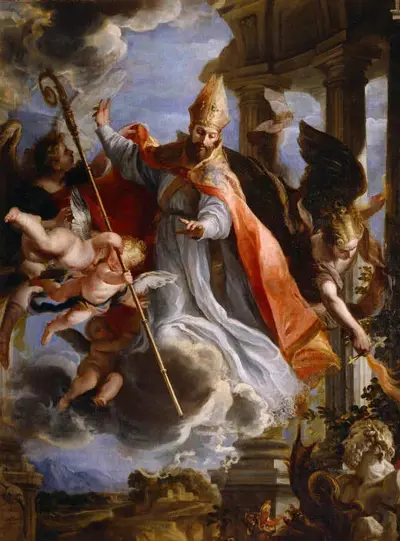
Augustine of Hippo, also known as Saint Augustine, was a theologian, philosopher, and the bishop of Hippo Regius in Numidia, Roman North Africa. His writings influenced the development of Western philosophy and Western Christianity, and he is viewed as one of the most important Church Fathers of the Latin Church in the Patristic Period. His many important works include The City of God, On Christian Doctrine, and Confessions.
