Baruch Spinoza Quotes
As men's habits of mind differ, so that some more readily embrace one form of faith, some another, for what moves one to pray may move another only to scoff, I conclude, in accordance with what has gone before, that everyone should be free to choose for himself the foundations of his creed, and that faith should be judged only by its fruits; each would then obey God freely with his whole heart, while nothing would be publicly honoured save justice and charity.
Spinoza’s ideas were considered so radical and dangerous that he was the only man in history who was excommunicated by the Catholics, the Jews and the Muslims.
Benedict Spinoza, 1632-1677, Dutch Philosopher, Theological-Political Treatise, 1670
Sourced by: Eigen's Political and Historical Quotations

Quintus Septimius Florens Tertullianus


This was a remarkable public statement for its time. No other political leader of an Islamic country would dare claim that people have a right to be atheists. Very few would even suggest that people should be free to choose their own religion.


Anne was a Protestant but her father James II was a Roman Catholic. There was always suspicion about her true religious allegiance by the extremists in the Church of England. The Act of Toleration, despite its name, required the Church of England to be the established church and the sovereign’s to be the heads of the church.

Pen name: Jack Nipps. Leland was a Baptist evangelist who had worked with Thomas Jefferson and James Madison to secure Freedom of Conscience in Virginia. Many people think that ideas such as this are the views of irreligious men and women, but Leland was a devout, evangelical Baptist and Baptists suffered discrimination in early Colonial America. Freedom of conscience was essential for all religions who were not in the local majority. Tolerance essential. See 43,065.


Samuel Langhorne Clemens, 1835-1910


At the time there was an issue of religious freedom that is in public discourse: It emanated from the Obama Care law which required employers to provide health insurance that does not discriminate against women by refusing to disallow coverage for birth control (pills, diaphragms, etc.) This legislation covered the employees of general institutions run by religions such as schools, hospitals, and retirement communities. Roman Catholics and other religions which viewed birth control as a sin were put in a position where they had to pay for something that they regarded as sinful. So the church did not have complete religious freedom. However, if these institutions would deny to their employees a basic right that the law says belongs to all institutions. If an exception would be made for birth control what about blood transfusions. The Jehovah’s Witnesses believe that autologous blood transfusions are contrary to the world of God. So what if institutions they run decided to not cover these transfusions in their insurance policies? Or a Jewish University or a Muslim cultural center decided not to cover medical procedures in hospitals that serve pork? There have been many examples where one religion’s freedom has been curtailed slightly when they conflict with individual rights or other rights. Plural marriage for Mormons and Muslims are against the law. Christian Scientists have been forced to provide medical care for some members even though their religion prohibits it. There is no solution that will not curtail someone’s rights under some circumstances.


The modernity of this ancient leader is striking. For another example see his view on the importance of engendering supportive public opinion: XXX

It is an error to say that. It is an error to say that He was the last Pope to hold temporal power. Years later, the Vatican rejected this view and adopted the modern concept of freedom of conscience. See {612714}.


Henry of Navarre


New Lanark was a Utopian commune organized by Owen.
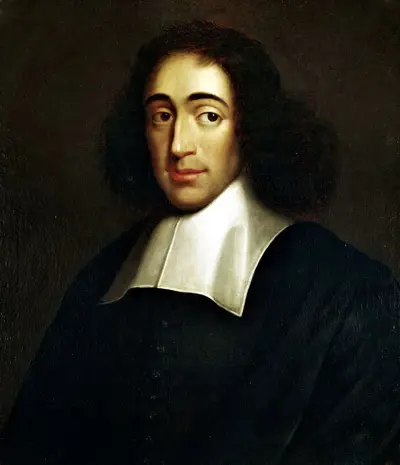
Baruch (de) Spinoza was a Dutch philosopher of Portuguese Sephardi origin. One of the early thinkers of the Enlightenment and modern biblical criticism, including modern conceptions of the self and the universe, he came to be considered one of the great rationalists of 17th-century philosophy. Inspired by the groundbreaking ideas of René Descartes, Spinoza became a leading philosophical figure of the Dutch Golden Age. Spinoza's given name, which means "Blessed", varies among different languages. In the Netherlands he used the Portuguese name Bento. In his Latin and Dutch works, he used Latin: Benedictus de Spinoza.
